The second post in our UG Methods 101 series. The first covered how underground mining methods are selected from scratch; this one covers the method used across most of the Australian underground hard rock industry.
Longhole open stoping is exactly what it sounds like. Long production holes, typically 15 to 40 m, are drilled to create open stopes. With experience and careful QA/QC employed to manage the dilution and recovery risks, it is one of the most efficient underground production methods there is.
The factory setting
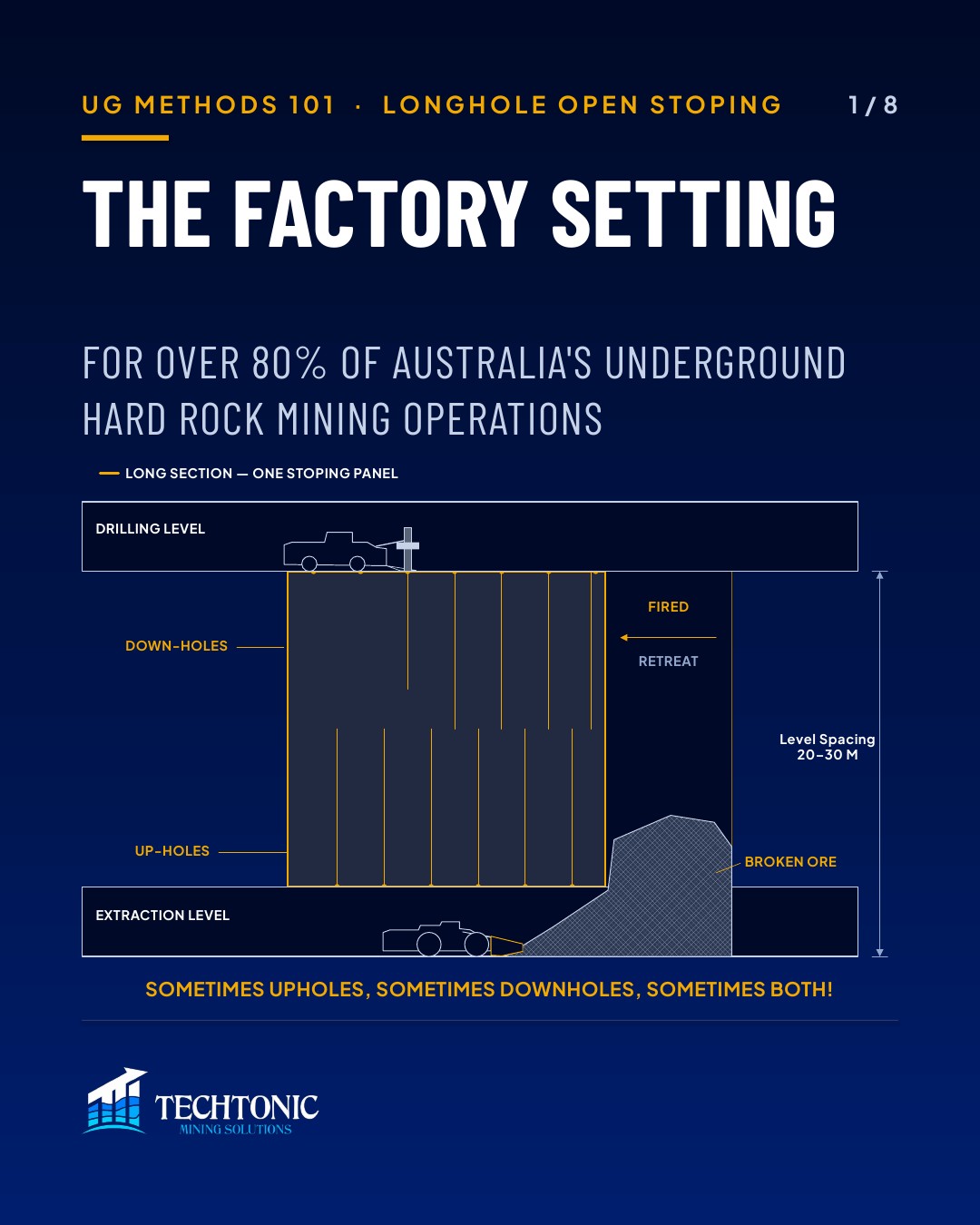
Longhole open stoping (LHOS, also called sublevel open stoping) is the default for more than 80% of Australia’s underground hard rock operations. Drilling and extraction levels sit 20 to 30 m apart, rings are fired on retreat, and the broken ore is drawn from the level below. Sometimes upholes, sometimes downholes, sometimes both.
Where it belongs
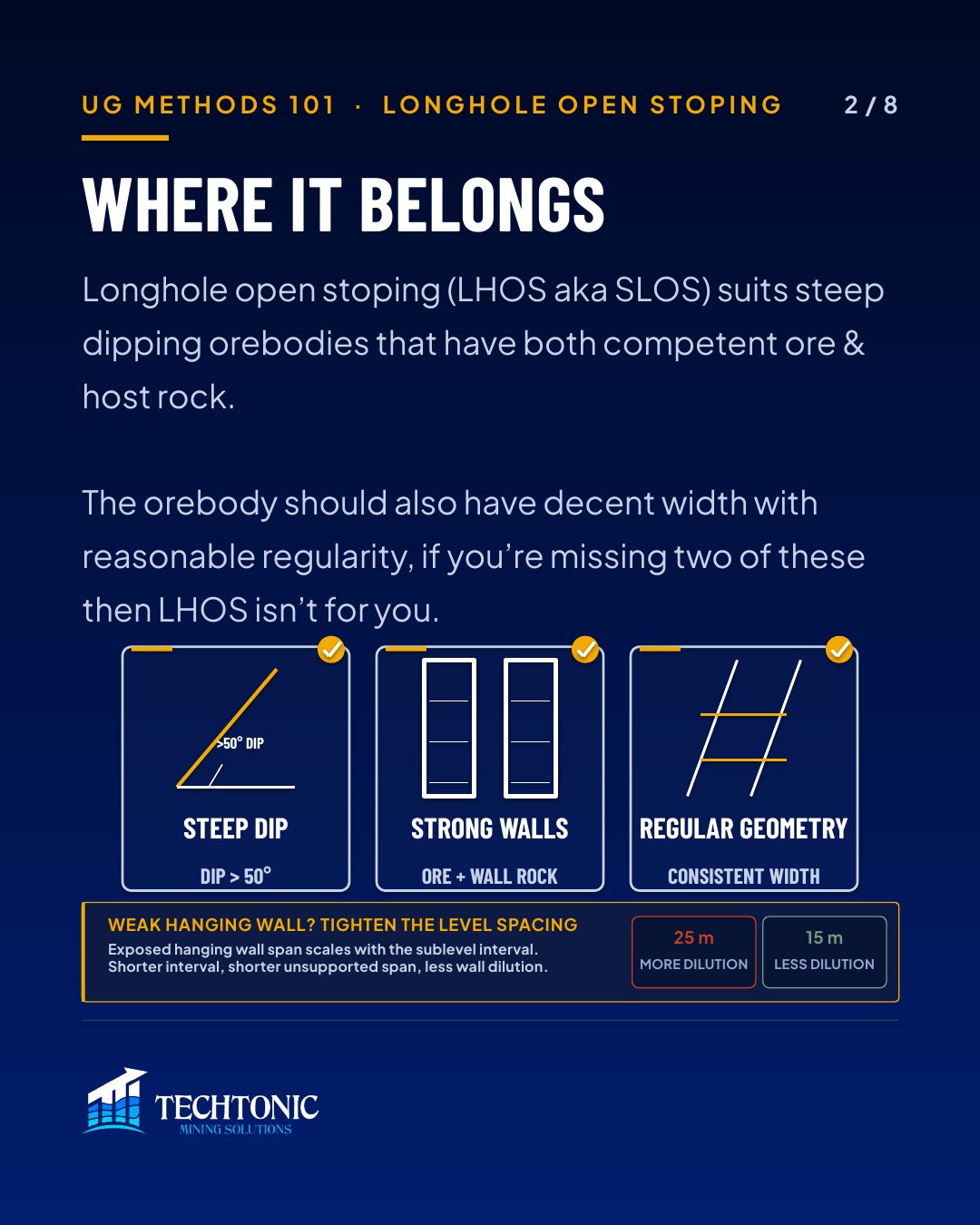
LHOS suits steeply dipping orebodies, above about 50°, with competent ore and competent host rock. The orebody should also have decent width and reasonable regularity. If you are missing two of these, LHOS is not for you.
Weak hanging wall? Tighten the level spacing. The exposed hanging wall span scales with the sublevel interval: a shorter interval means a shorter unsupported span and less wall dilution.
Mine along or across?
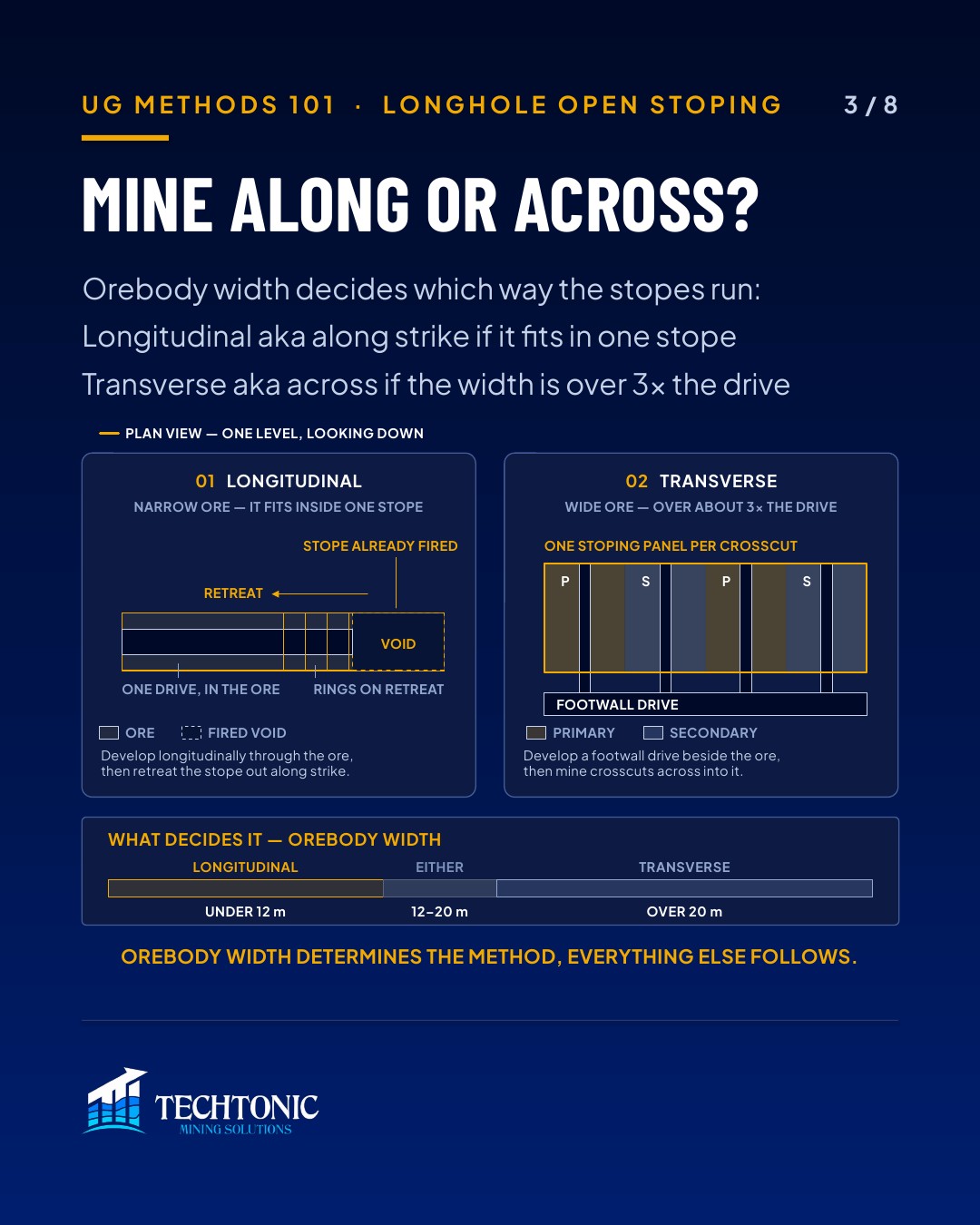
Orebody width decides which way the stopes run. Under about 12 m, mine longitudinally: develop along strike through the ore, then retreat the stope out along strike. Over about 20 m, or more than three times the drive width, mine transverse: develop a footwall drive beside the ore, then mine crosscuts across into it as primary and secondary stopes. Between the two, either can work. Orebody width determines the method; everything else follows.
Opening the slot
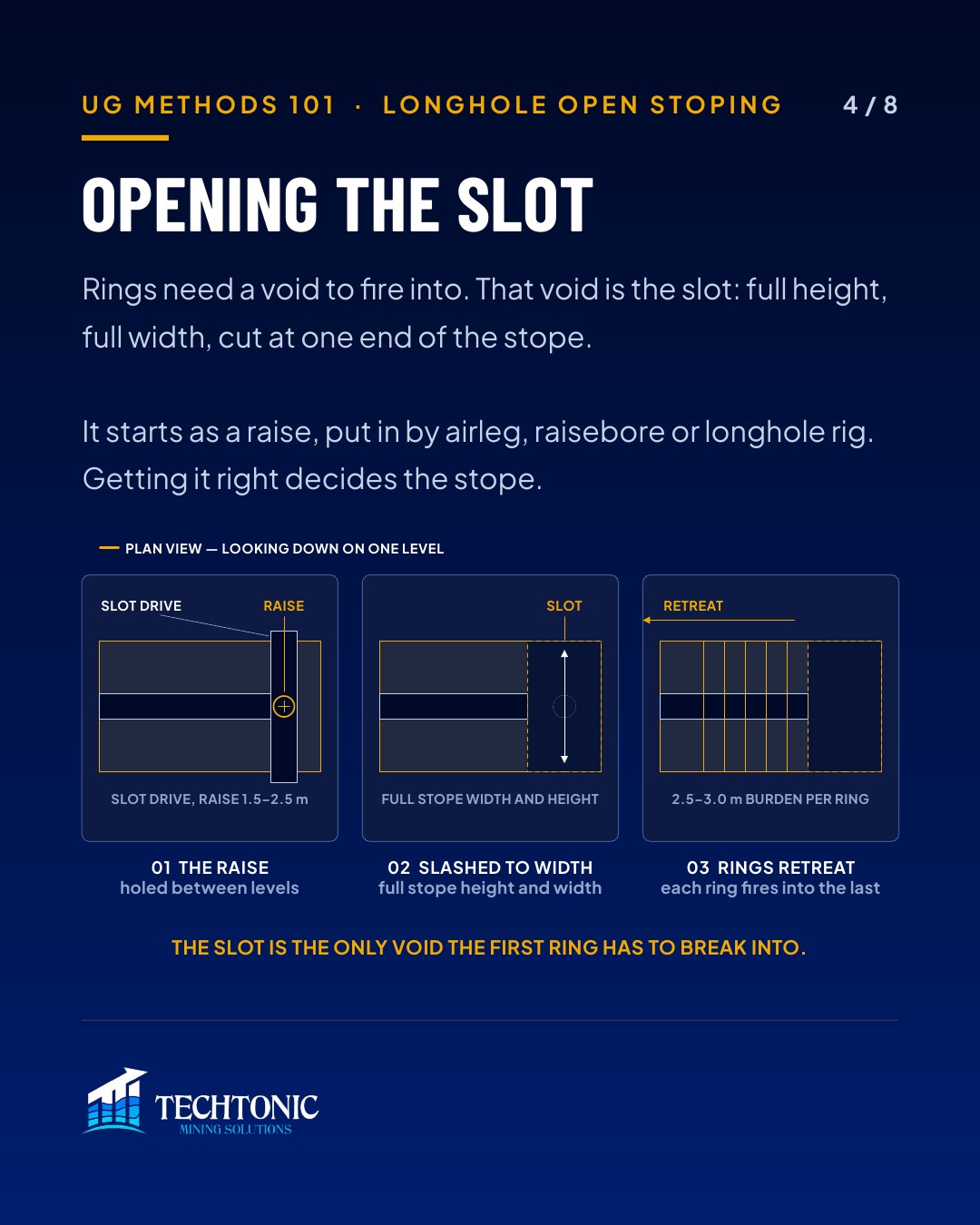
Rings need a void to fire into. That void is the slot: full height and full width, cut at one end of the stope. It starts as a raise, put in by airleg, raisebore or longhole rig, which is then slashed out to the full stope width and height before the rings retreat into it, each firing into the last. The slot is the only void the first ring has to break into, and getting it right decides the stope.
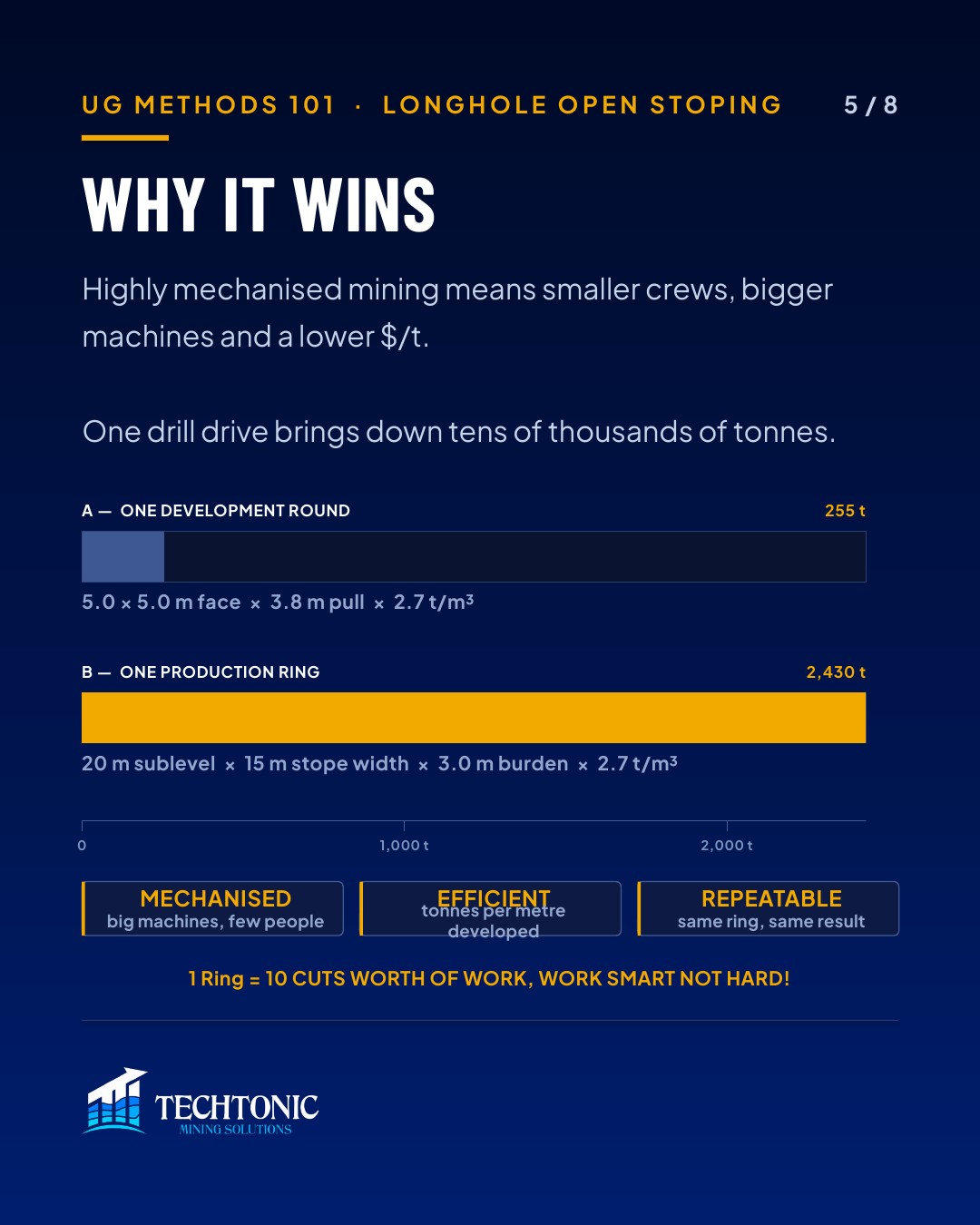
Why it wins
Highly mechanised mining means smaller crews, bigger machines and a lower cost per tonne. One development round on a 5.0 × 5.0 m face pulling 3.8 m brings down around 255 t. One production ring on a 20 m sublevel, 15 m stope width and 3.0 m burden brings down around 2,430 t — roughly ten cuts’ worth of work. Mechanised, efficient and repeatable: same ring, same result.
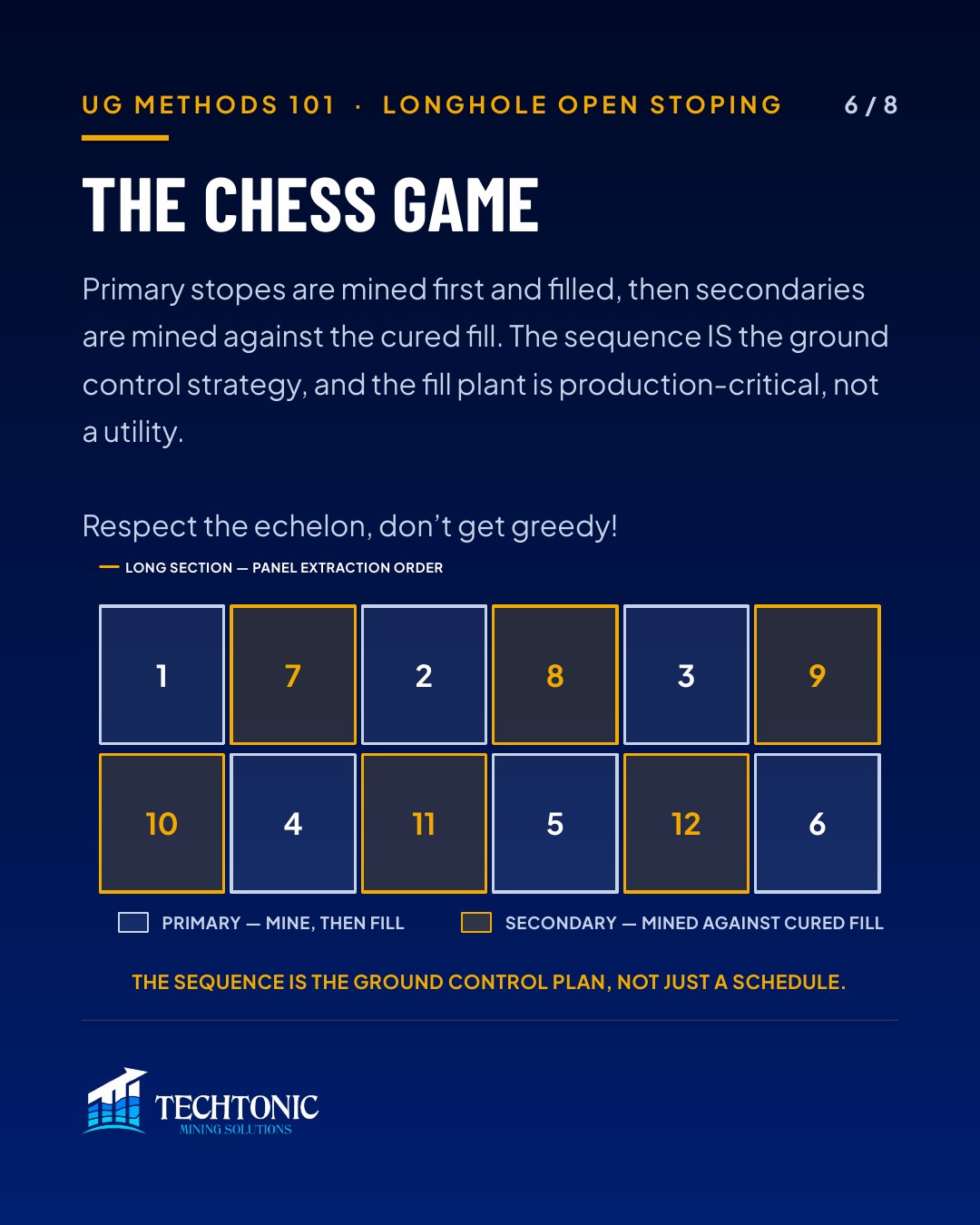
The chess game
Primary stopes are mined first and filled, then secondaries are mined against the cured fill. The sequence is the ground control strategy, not just a schedule, and the fill plant is production-critical, not a utility. Respect the echelon, and do not get greedy.
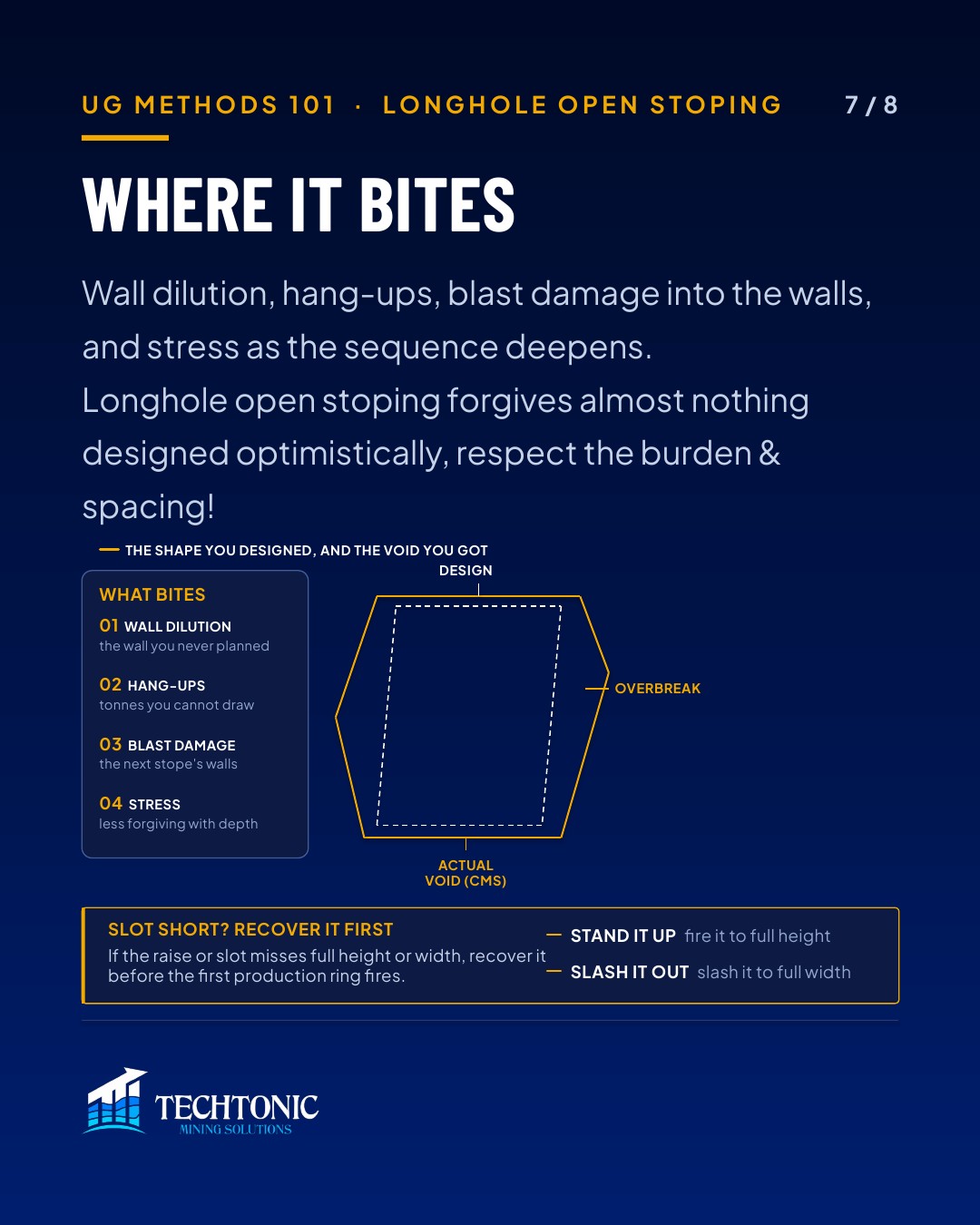
Where it bites
Wall dilution, hang-ups, blast damage into the walls, and stress as the sequence deepens. Longhole open stoping forgives almost nothing designed optimistically, so respect the burden and spacing.
And if the raise or slot misses full height or width, recover it before the first production ring fires: fire it to full height, then slash it to full width.
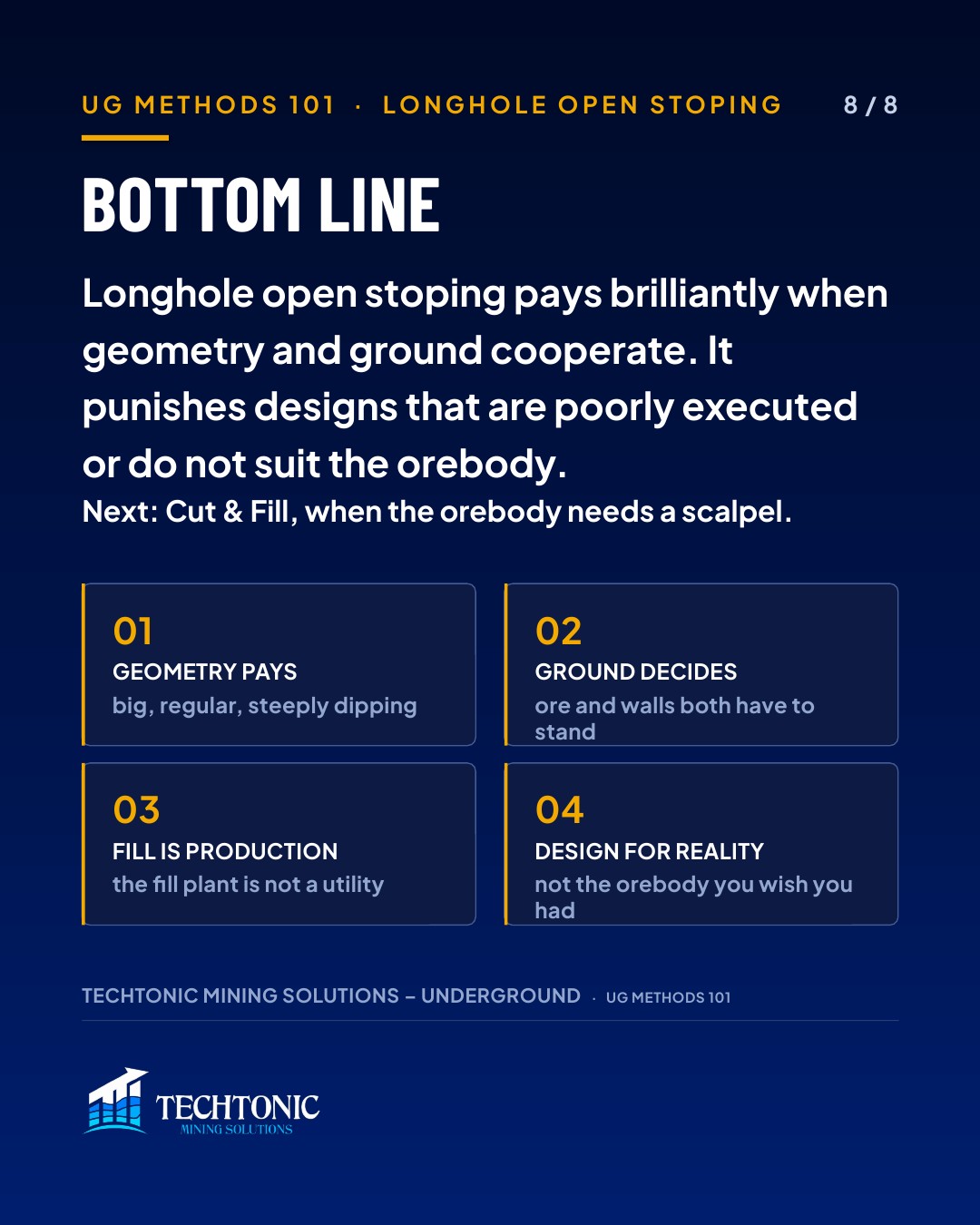
Bottom line
- Geometry pays — big, regular, steeply dipping
- Ground decides — ore and walls both have to stand
- Fill is production — the fill plant is not a utility
- Design for reality — not the orebody you wish you had
Longhole open stoping pays brilliantly when geometry and ground cooperate, and punishes designs that are poorly executed or do not suit the orebody. Next in the series: cut and fill, for when the orebody needs a scalpel.
What’s better, upholes or downholes?
The carousel
This piece began as a LinkedIn carousel. The full deck is below — use the arrows, or click any slide to enlarge.