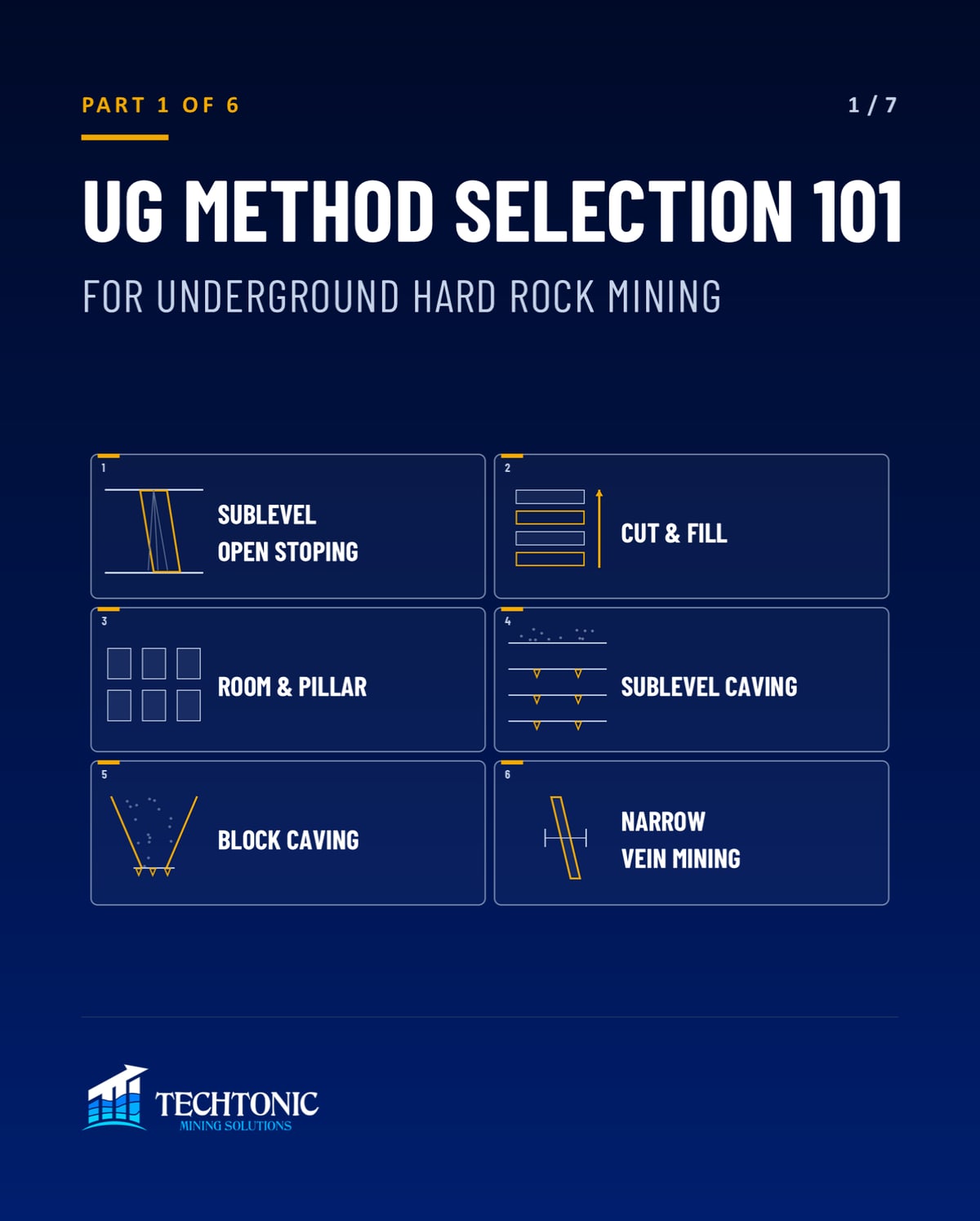
There are maybe six sensible ways to mine an underground hard rock orebody. Pick the wrong one and you will pay for it every day for the next ten to twenty years. Method selection is the decision that can, and will, box you in.
We make the best decision we can with the information available at the time. Unfortunately, at the point the decision has to be made, we never have all the information we would like.
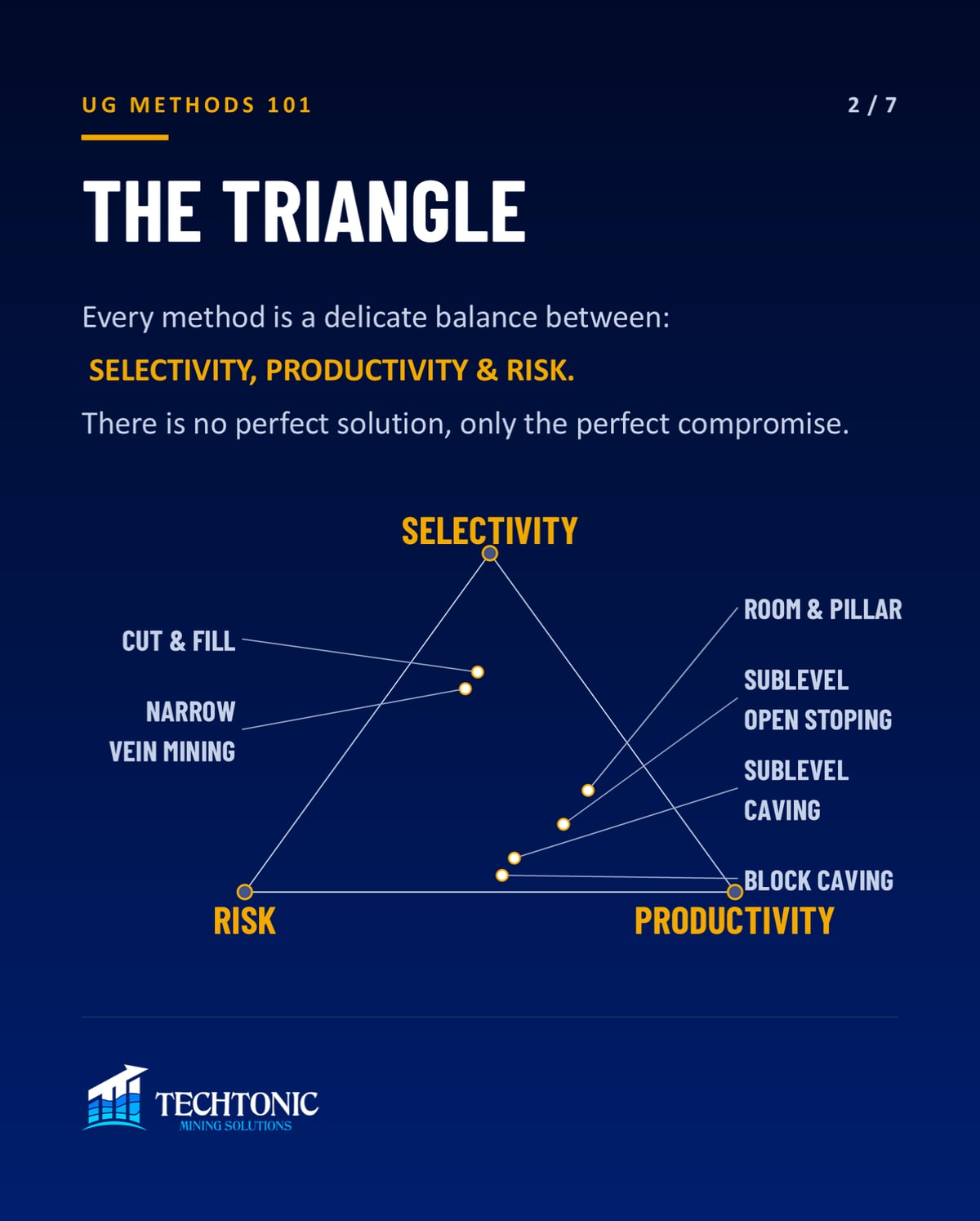
Every method is a compromise
Each one sits somewhere in a triangle: selectivity, productivity, risk. There is no corner-free answer. There is only the right compromise for this orebody, which is a different question from the best method in the abstract.
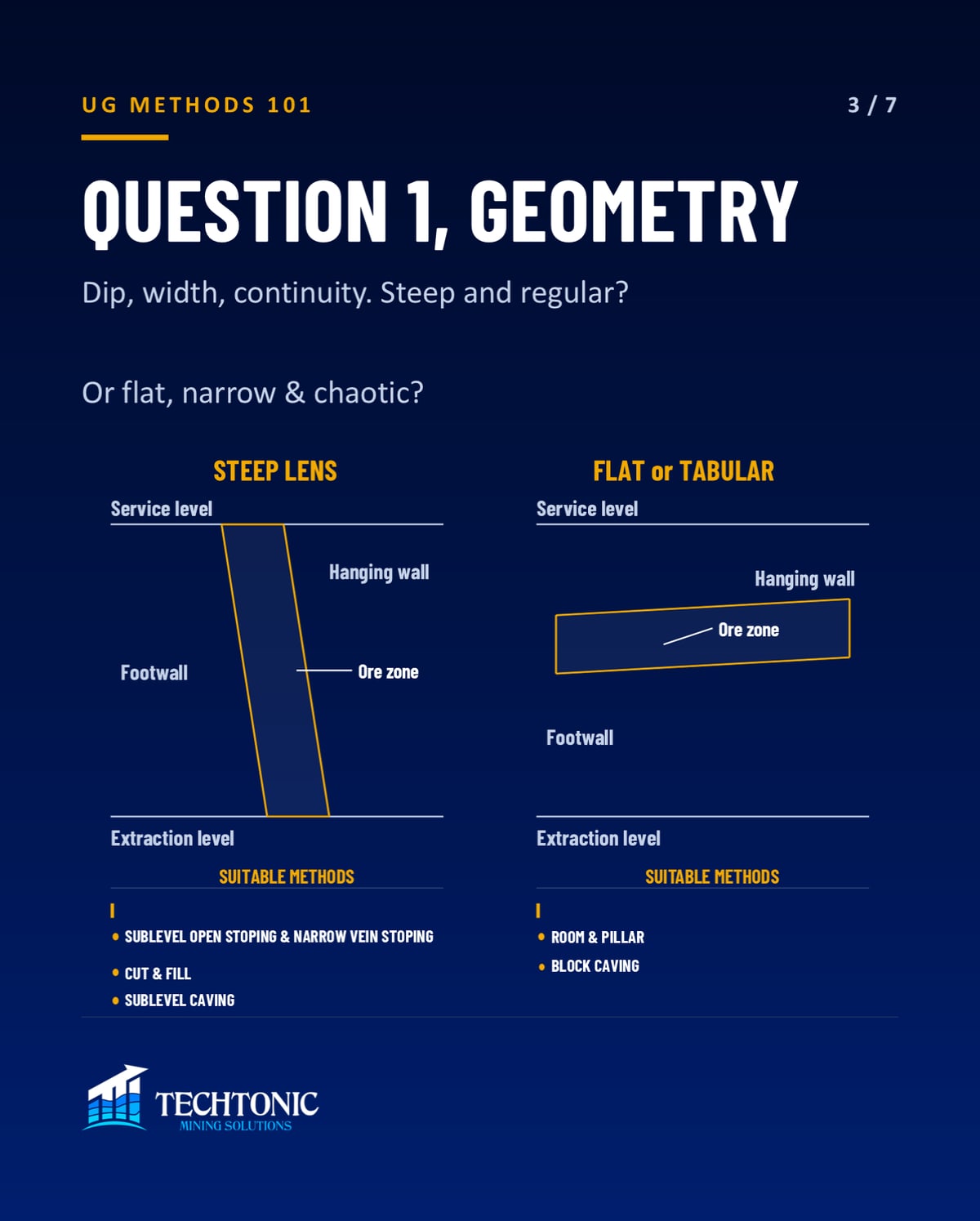
Question one: geometry
Dip, width, continuity. Steep and regular means gravity works for free and the bulk methods open up. Flat, narrow or chaotic and most of the menu has already closed before you have considered anything else.
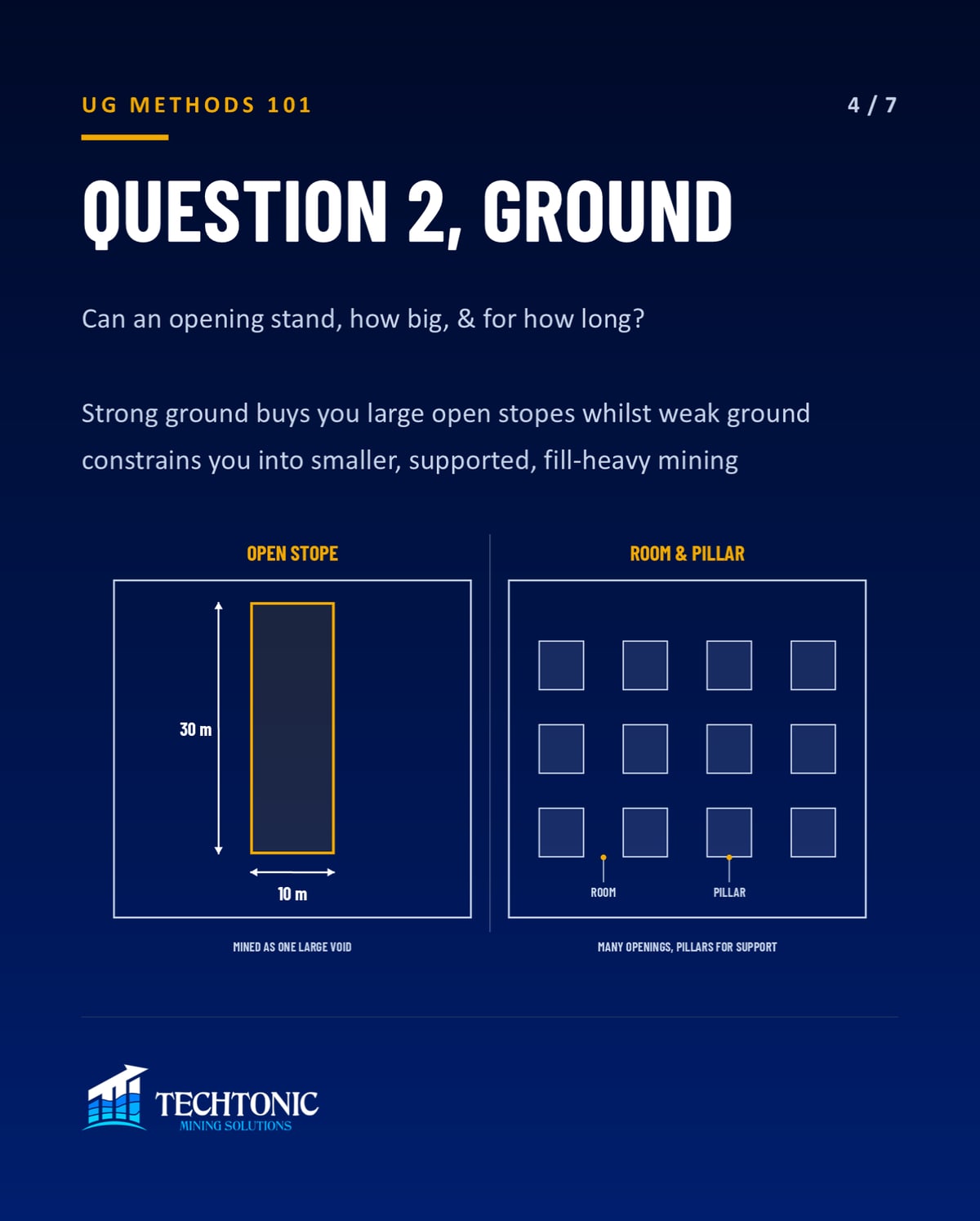
Question two: ground
Can an opening stand, how big, and for how long? Strong ground buys you large open stopes. Weak ground pushes you toward small, supported, fill-heavy mining, whatever the geometry might otherwise allow.
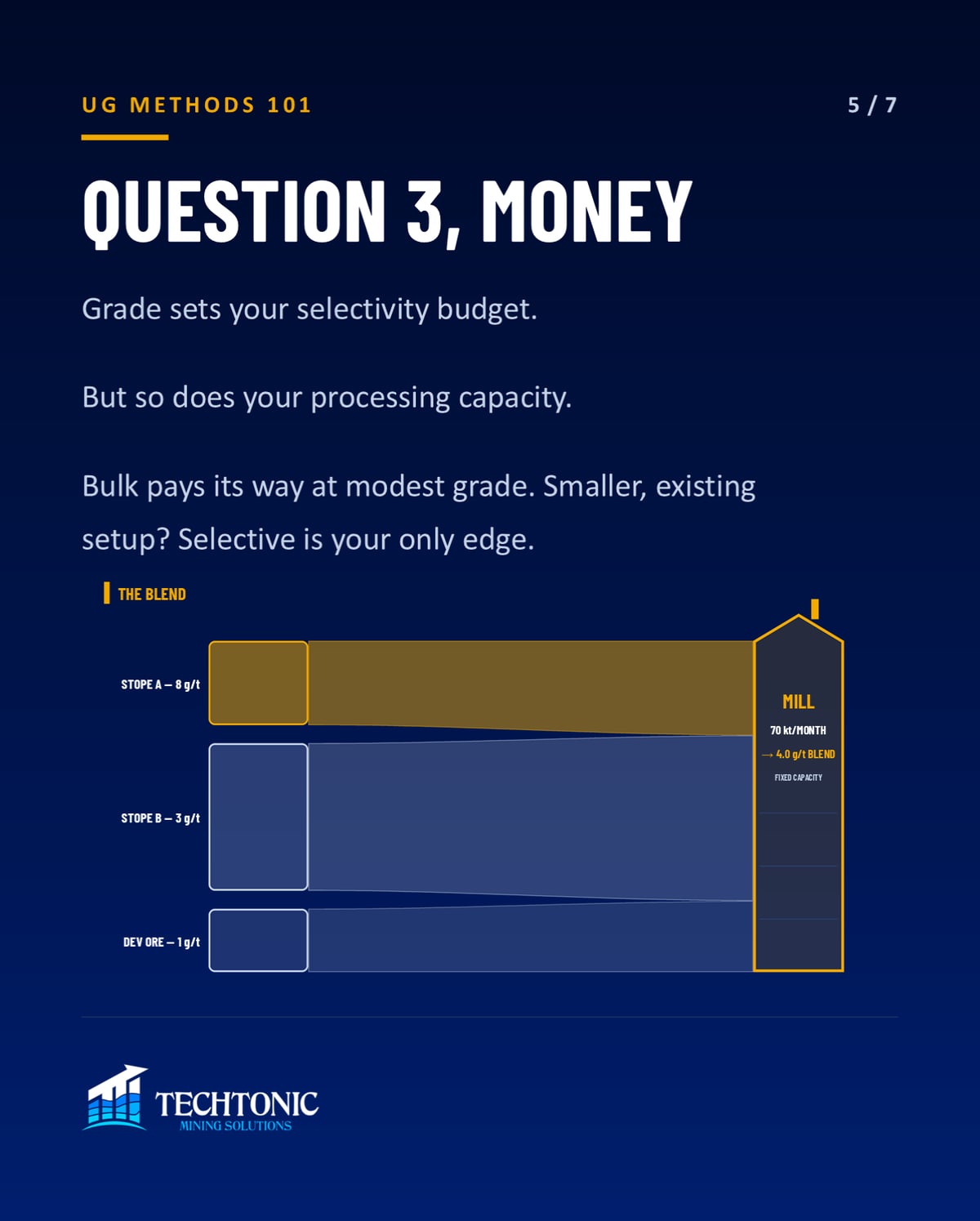
Question three: money
Grade usually sets your selectivity budget. But there is a case that catches people out: when the mill rather than the orebody is the constraint, even high grade gets mined selectively, because you cannot afford to fill the plant with dilution.
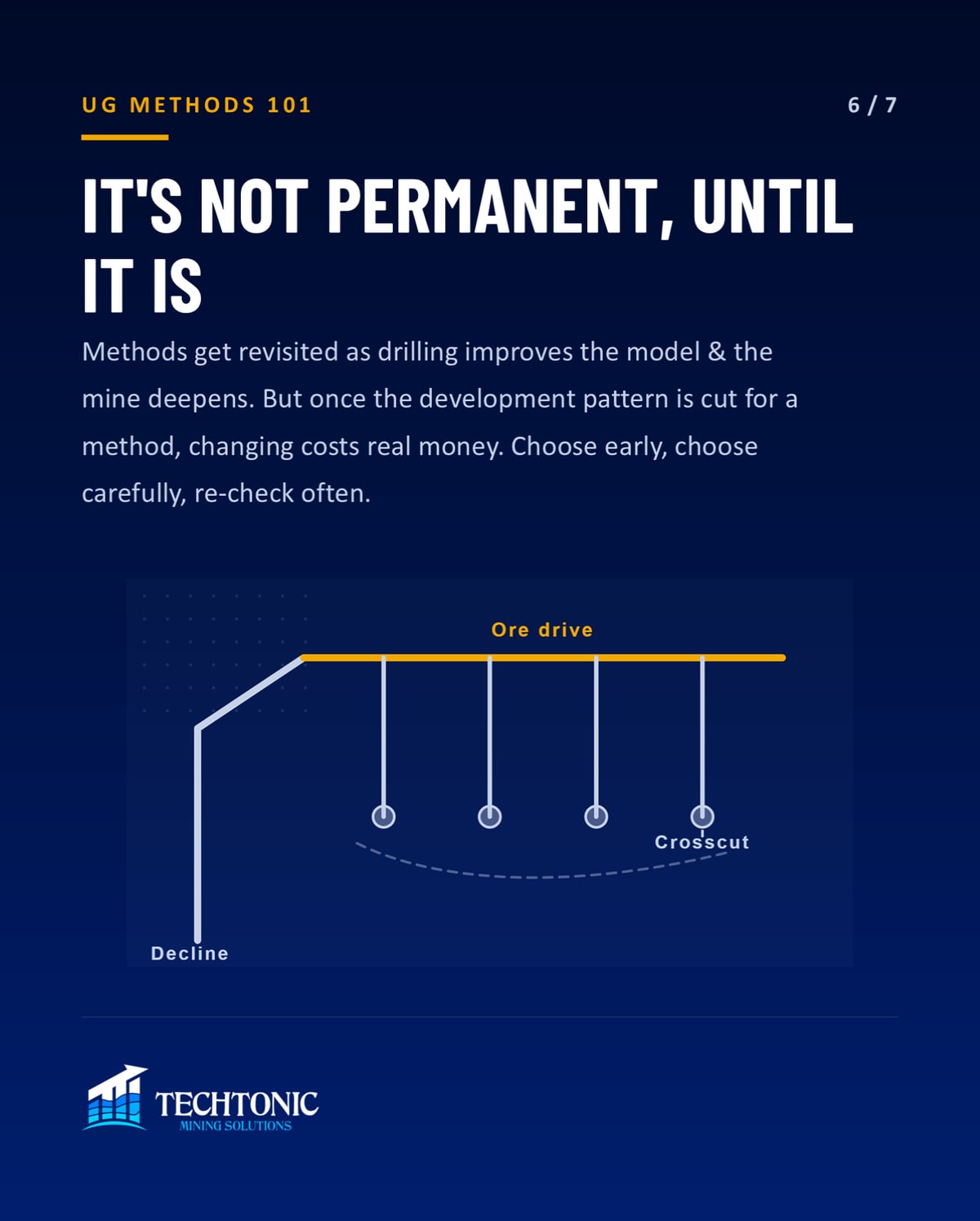
It is not permanent, until it is
Methods do get revisited as drilling improves the model and the mine deepens. But once the development pattern is cut for a particular method, changing it costs real money. Choose early, and choose knowing that the choice hardens fast.
Sublevel open stoping, cut and fill, room and pillar, narrow vein, caving — each wins somewhere and each quietly bleeds somewhere else. Which one is your operation running, and would you choose it again today?
The carousel
This piece began as a LinkedIn carousel. The full deck is below — use the arrows, or click any slide to enlarge.