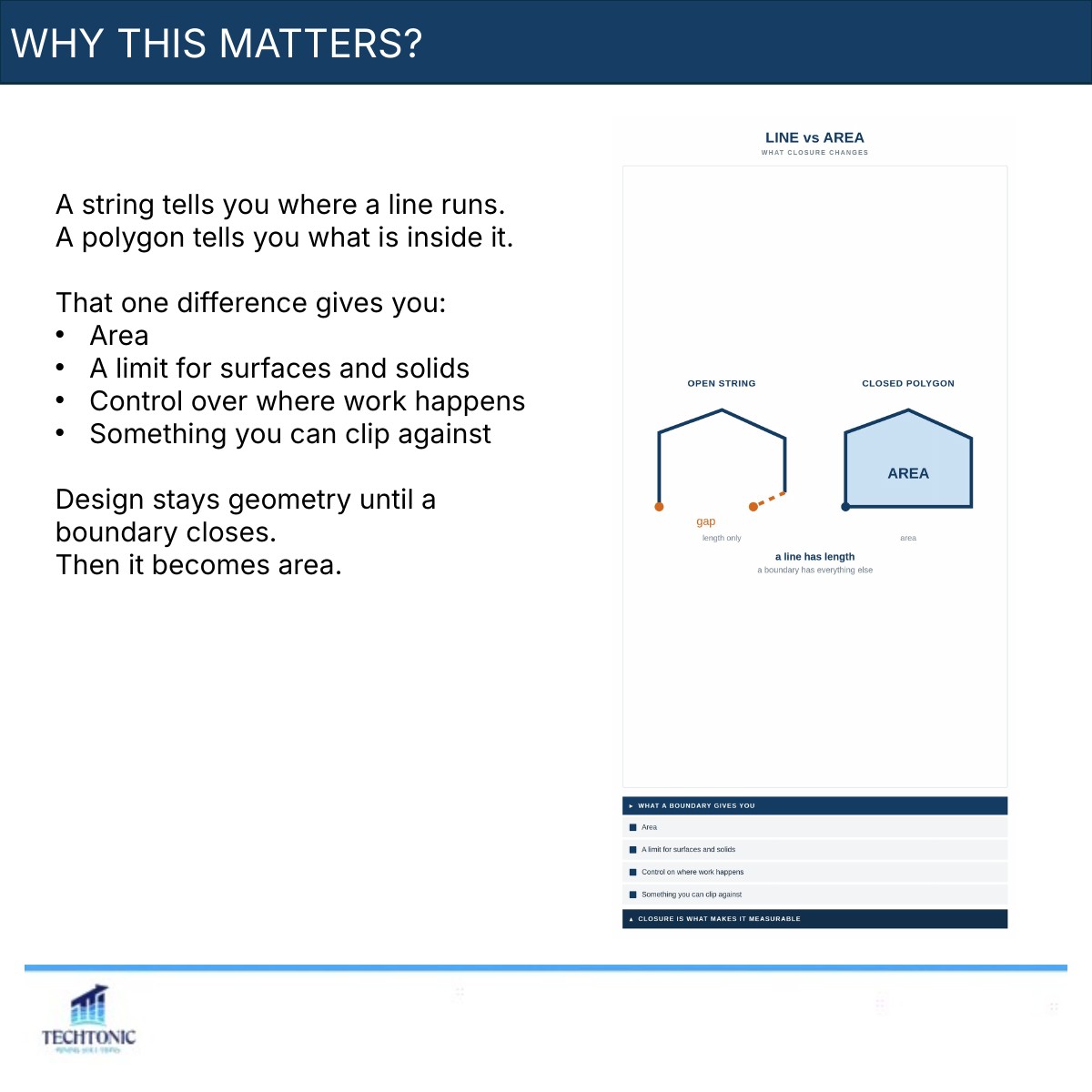
A string tells you where a line runs. A polygon tells you what is inside it.
Simple idea, but it can trip people up. Close a string and it becomes something you can actually measure: area, what sits inside it, something to clip a surface against. Design stays geometry until a boundary closes. Then it becomes area.
From string to polygon
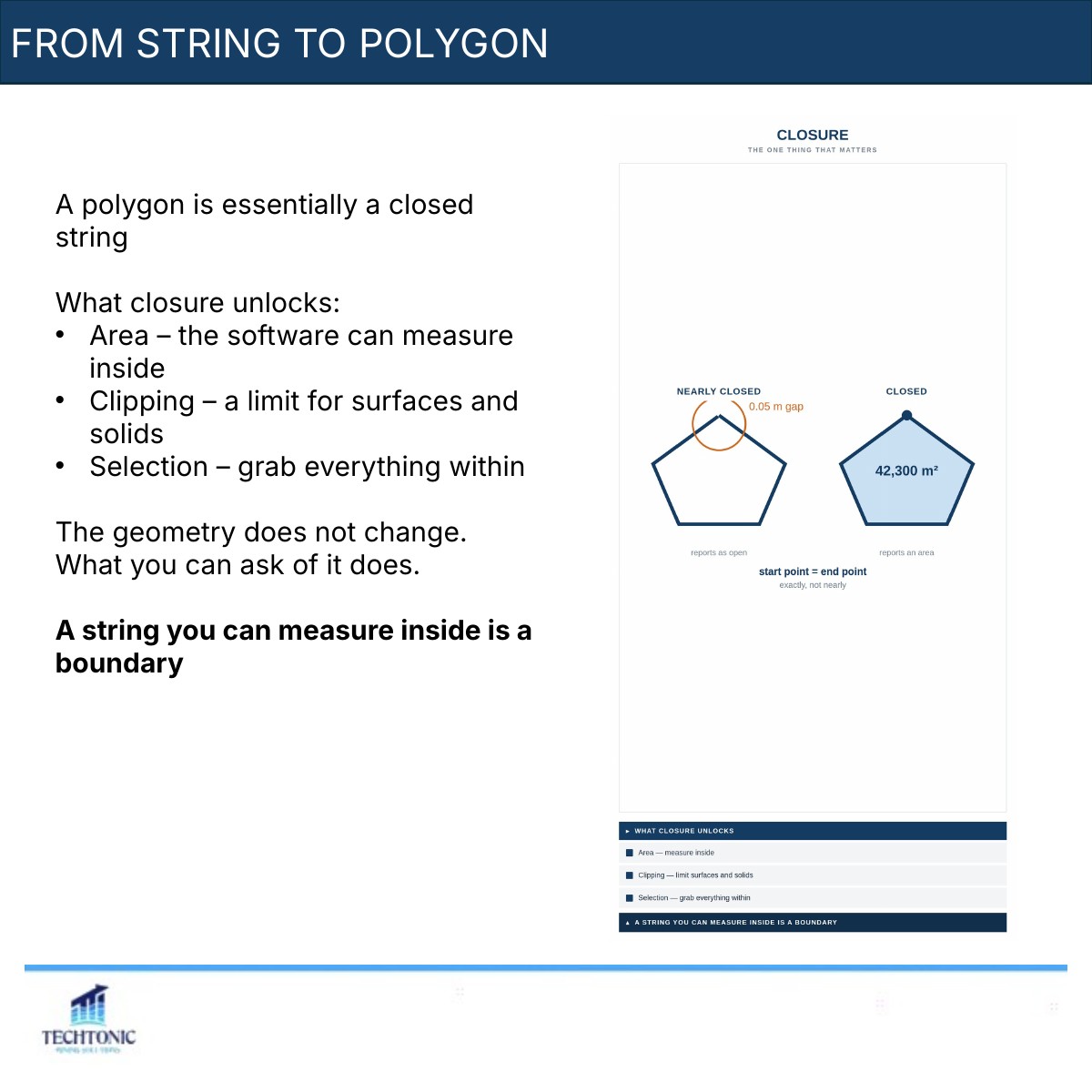
A polygon is essentially a closed string. The geometry does not change — what you can ask of it does. Closure unlocks three things:
- Area — the software can measure inside
- Clipping — a limit for surfaces and solids
- Selection — grab everything within
A string you can measure inside is a boundary.
Pit and design boundaries
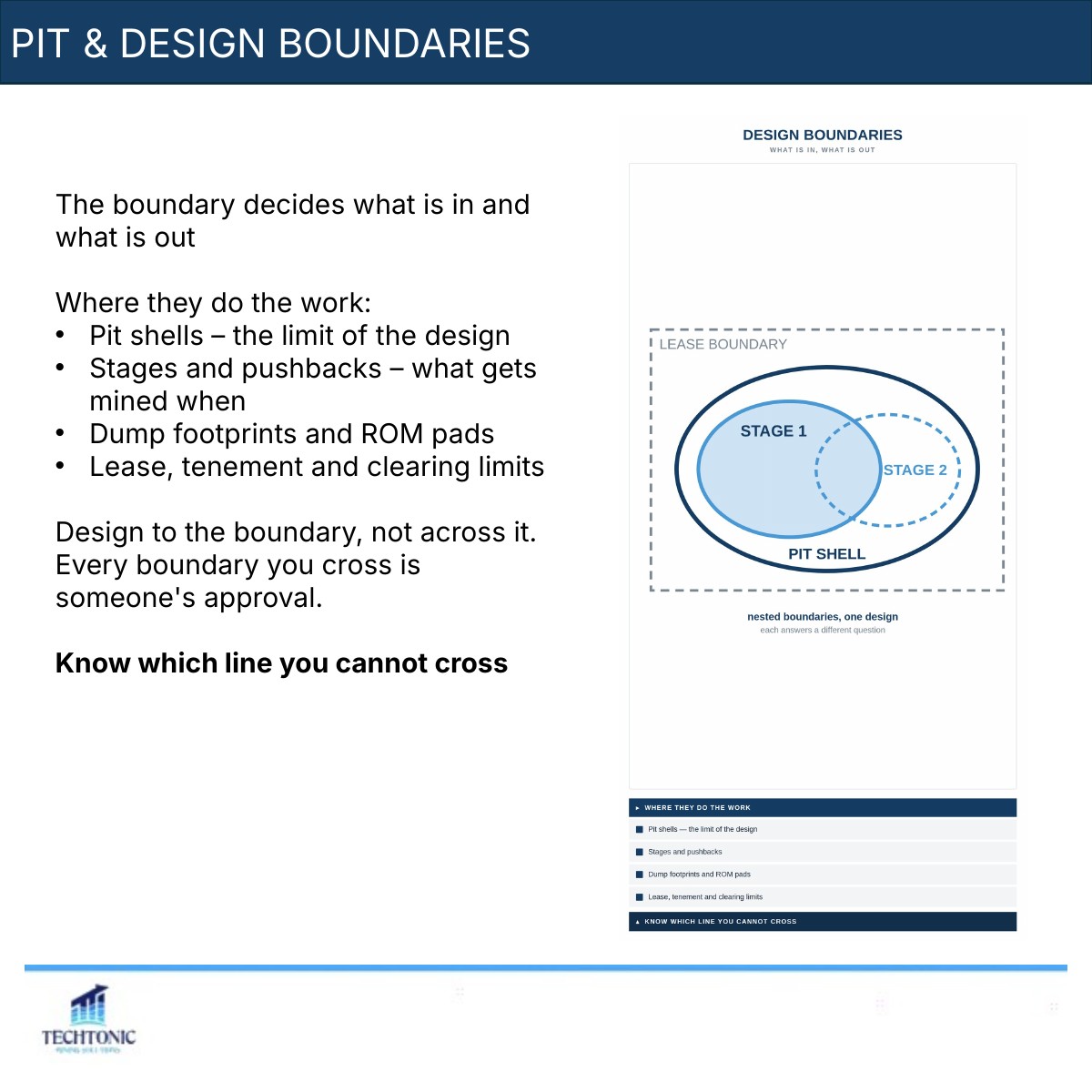
The boundary decides what is in and what is out. Pit shells set the limit of the design. Stages and pushbacks set what gets mined when. Dump footprints and ROM pads set where material goes. Lease, tenement and clearing limits set where you are allowed to be at all.
Design to the boundary, not across it. Every boundary you cross is someone’s approval. Know which line you cannot cross.
Exclusion zones
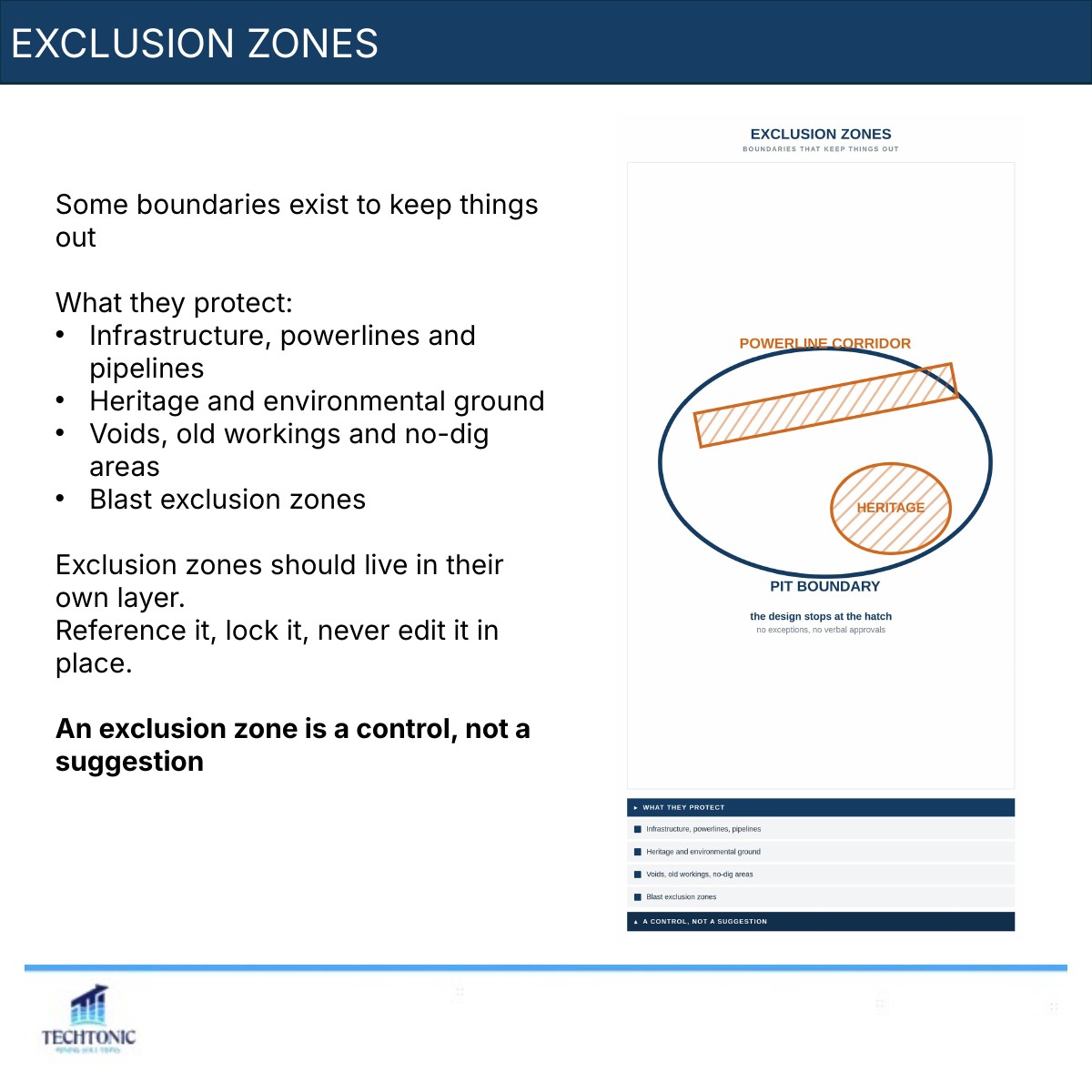
Some boundaries exist to keep things out: infrastructure, powerlines and pipelines; heritage and environmental ground; voids, old workings and no-dig areas; blast exclusion zones.
Exclusion zones should live in their own layer. Reference it, lock it, and never edit it in place. An exclusion zone is a control, not a suggestion.
Area, volume and reporting
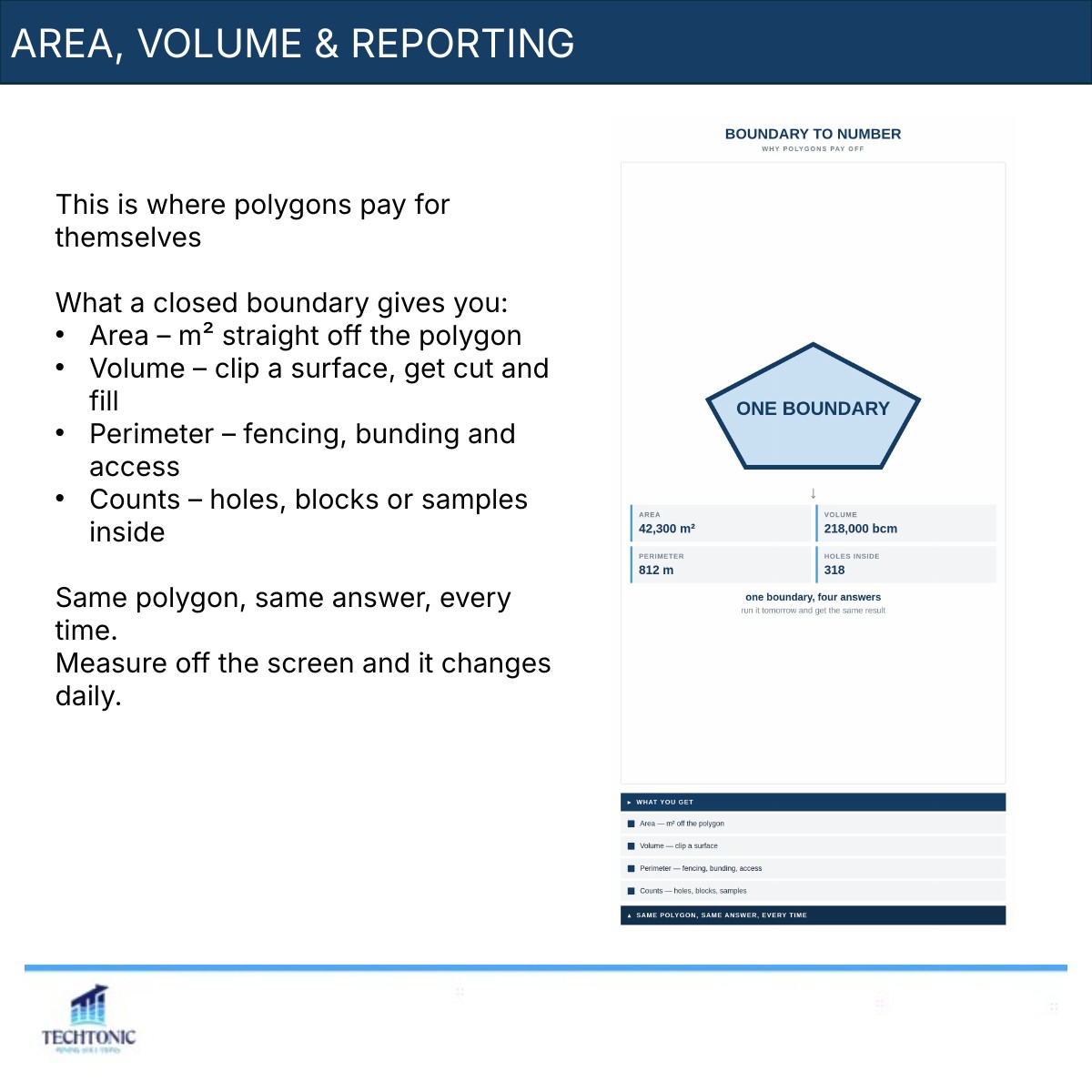
This is where polygons pay for themselves. A closed boundary gives you area straight off the polygon, cut and fill volumes when you clip a surface, perimeter for fencing, bunding and access, and counts of holes, blocks or samples inside.
Same polygon, same answer, every time. Measure off the screen and it changes daily.
When polygons go wrong
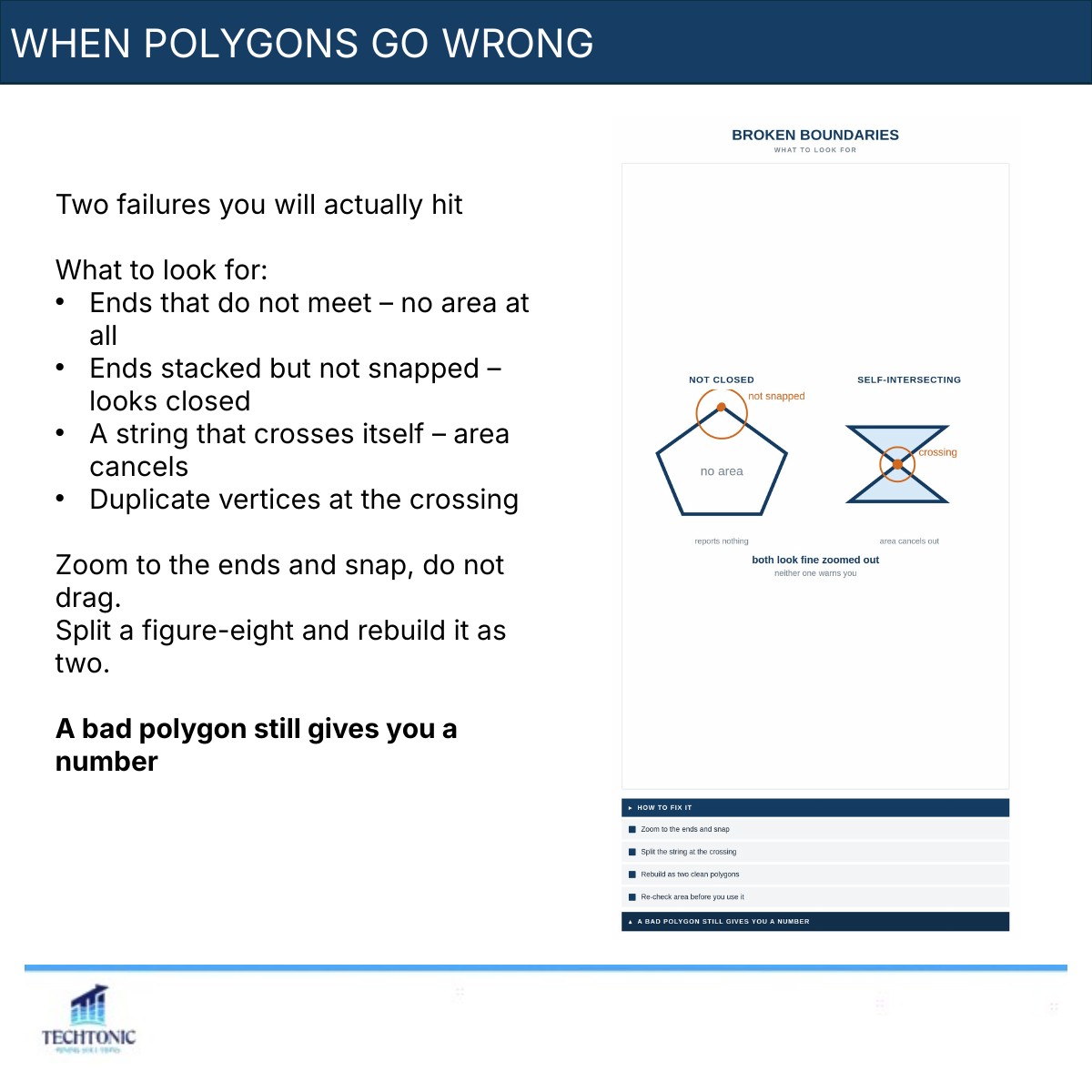
The part worth paying attention to is what happens when they do not close properly. A gap you cannot see at zoom level: ends that do not meet give you no area at all, and ends that are stacked but not snapped look closed when they are not. A string that crosses itself somewhere in the middle: the area cancels, usually with duplicate vertices at the crossing.
Neither one is guaranteed to throw an error. It is more likely you just get a number back that is wrong. Zoom to the ends and snap — do not drag. Split a figure-eight and rebuild it as two.
Key takeaways
- A polygon is essentially a closed string
- Closure is what makes area and volume possible
- Boundaries control the design, exclusions control access
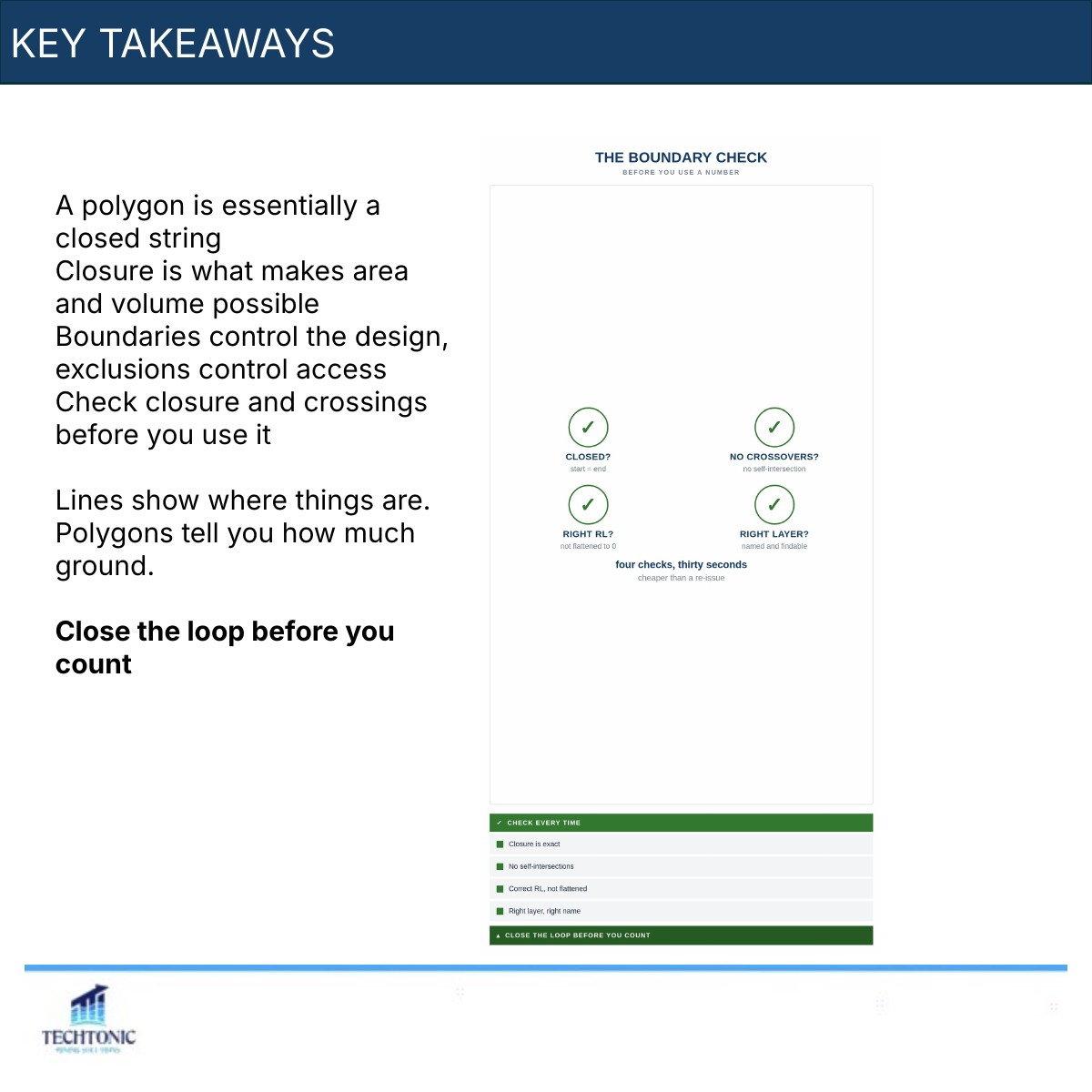
- Check closure and crossings before you use it
Lines show where things are. Polygons tell you how much ground. Close the loop before you count — and please share this with your grads and junior design engineers.
The carousel
This piece began as a LinkedIn carousel. The full deck is below — use the arrows, or click any slide to enlarge.