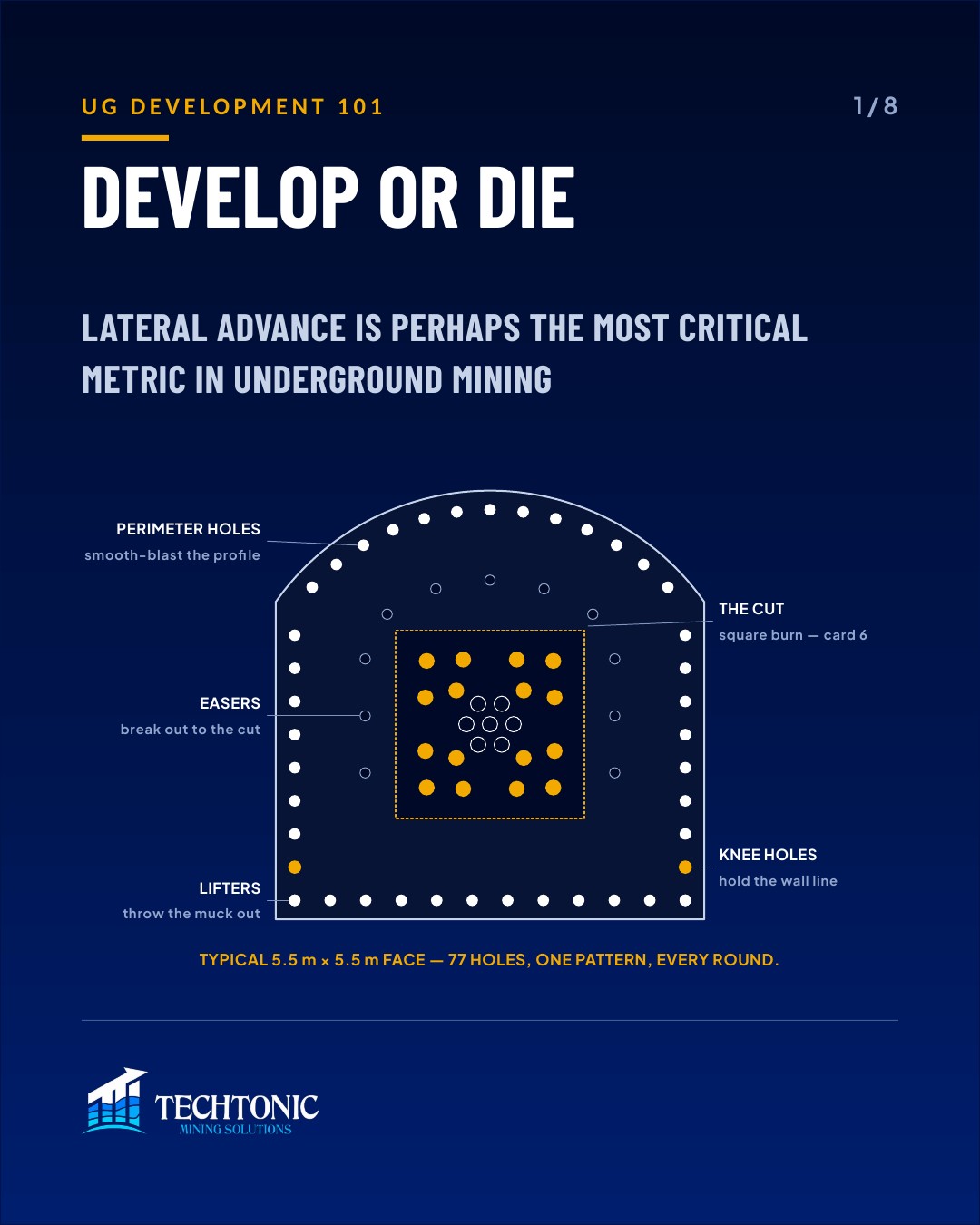
Lateral development is not the warm-up act before the real mining starts. It is the fundamental metric for ore delivery.
Every metre of lateral advance is a metre closer to ore access. Fall behind and no amount of stoping performance downstream can make up the lost time. Quality rounds, a protected cycle, the right-sized fleet and ground support that keeps pace: that is what keeps development ahead of the front it feeds.
Development leads
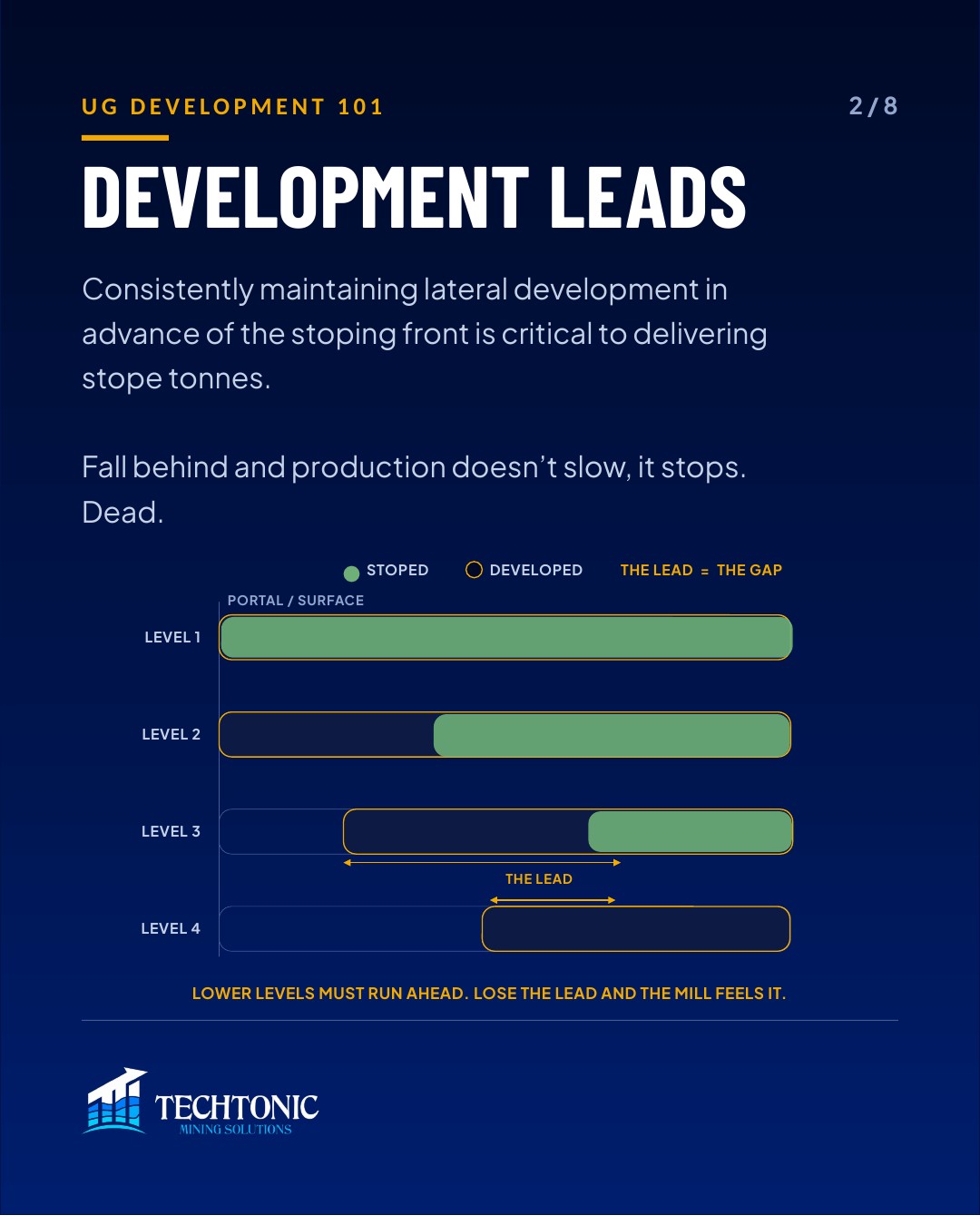
Consistently maintaining lateral development in advance of the stoping front is critical to delivering stope tonnes. The lower levels must run ahead. Lose the lead and production does not slow down — it stops, and the mill feels it.
The arithmetic
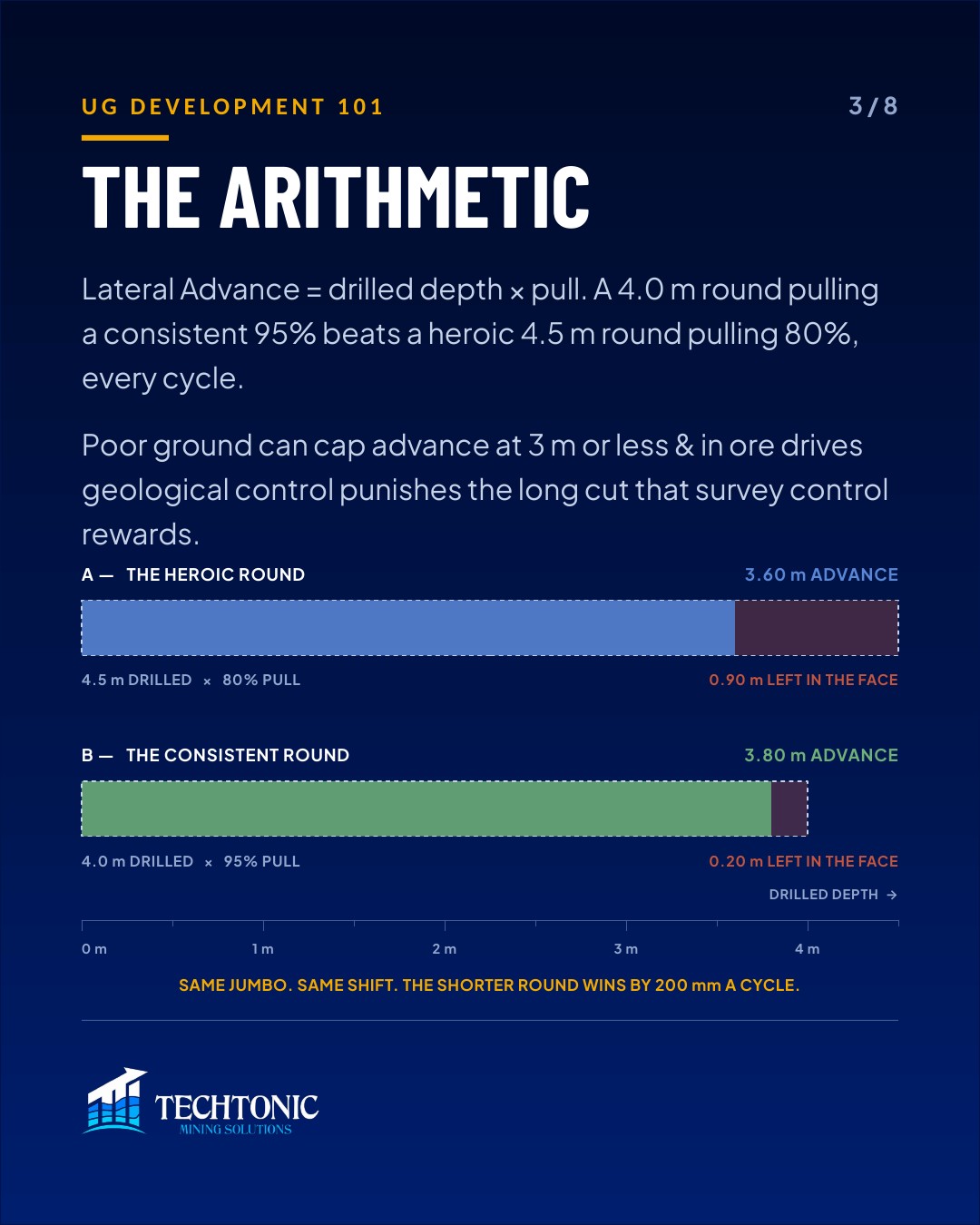
Lateral advance is drilled depth multiplied by pull. A 4.0 m round pulling a consistent 95% (3.80 m) beats a heroic 4.5 m round pulling 80% (3.60 m), every cycle. Same jumbo, same shift, and the shorter round wins by 200 mm a cycle.
Poor ground can cap advance at 3 m or less, and in ore drives geological control punishes the long cut that survey control rewards.
Protect the cycle
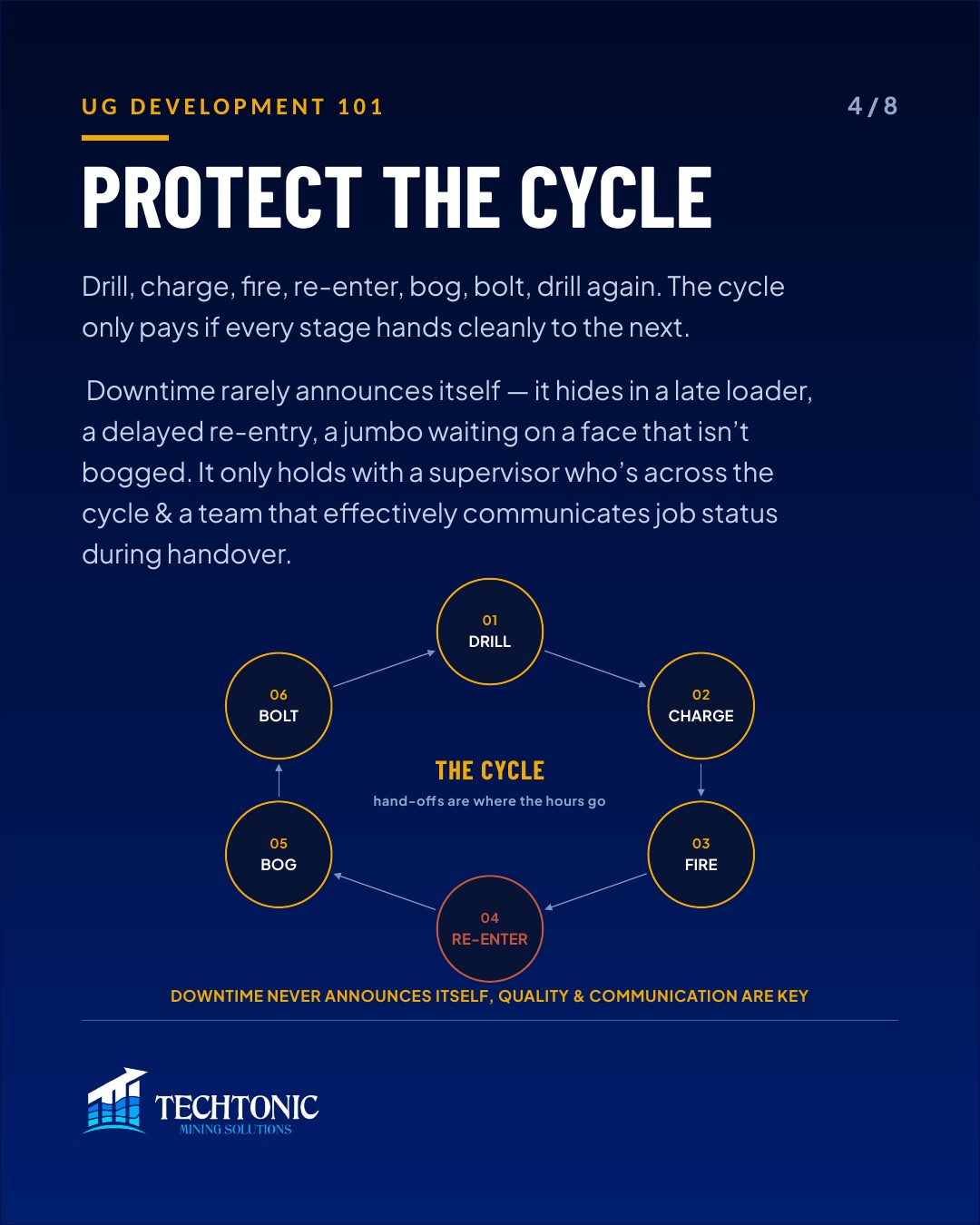
Drill, charge, fire, re-enter, bog, bolt, drill again. The cycle only pays if every stage hands cleanly to the next. Downtime rarely announces itself — it hides in a late loader, a delayed re-entry, a jumbo waiting on a face that is not bogged. It only holds with a supervisor who is across the cycle and a team that communicates job status properly at handover.
Right-size the fleet
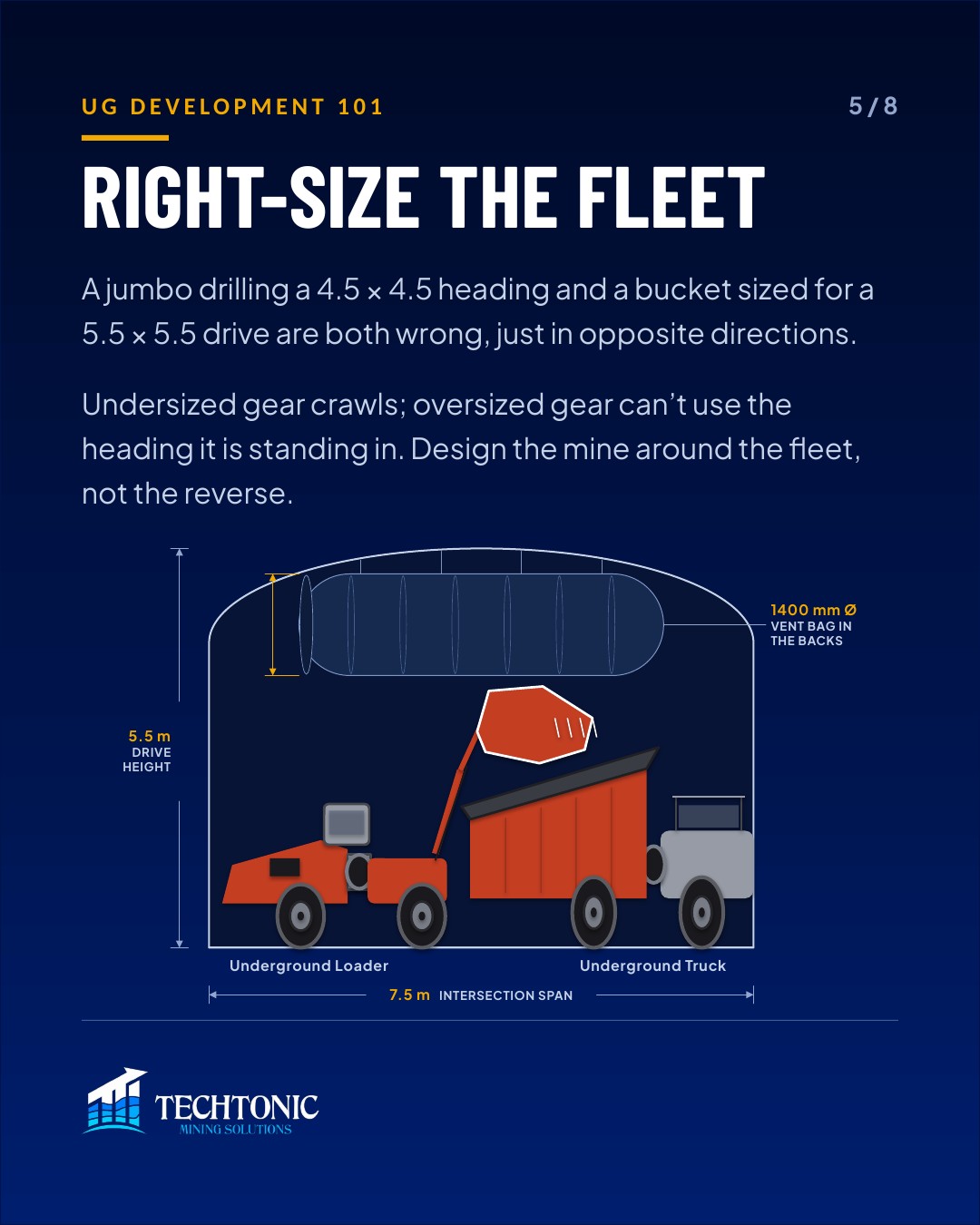
A jumbo drilling a 4.5 × 4.5 m heading and a bucket sized for a 5.5 × 5.5 m drive are both wrong, just in opposite directions. Undersized gear crawls; oversized gear cannot use the heading it is standing in. Design the mine around the fleet, not the reverse.
The burn cut
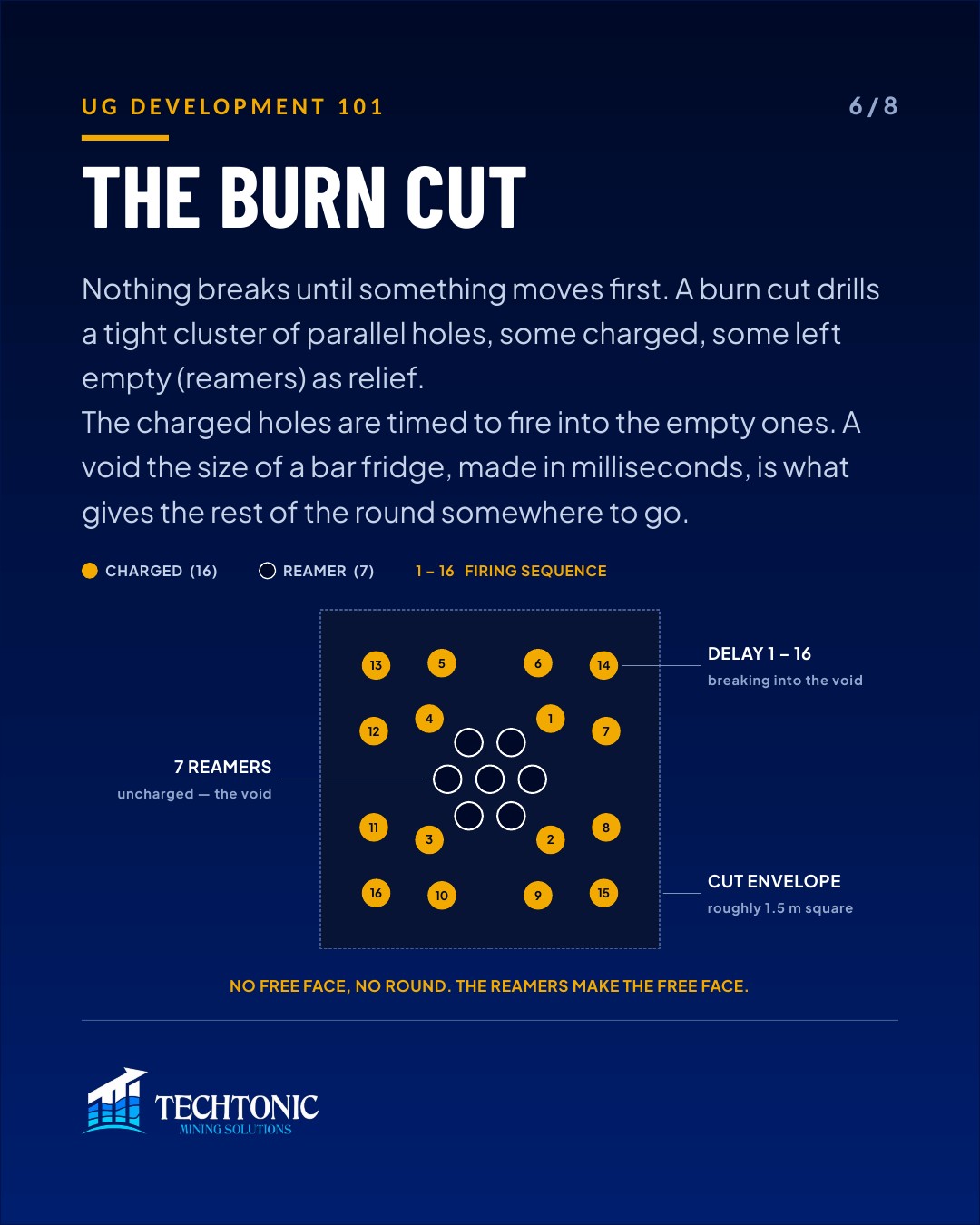
Nothing breaks until something moves first. A burn cut drills a tight cluster of parallel holes, some charged and some left empty as relief (the reamers). The charged holes are timed to fire into the empty ones. A void the size of a bar fridge, made in milliseconds, is what gives the rest of the round somewhere to go. No free face, no round.
Jumbo versus platform
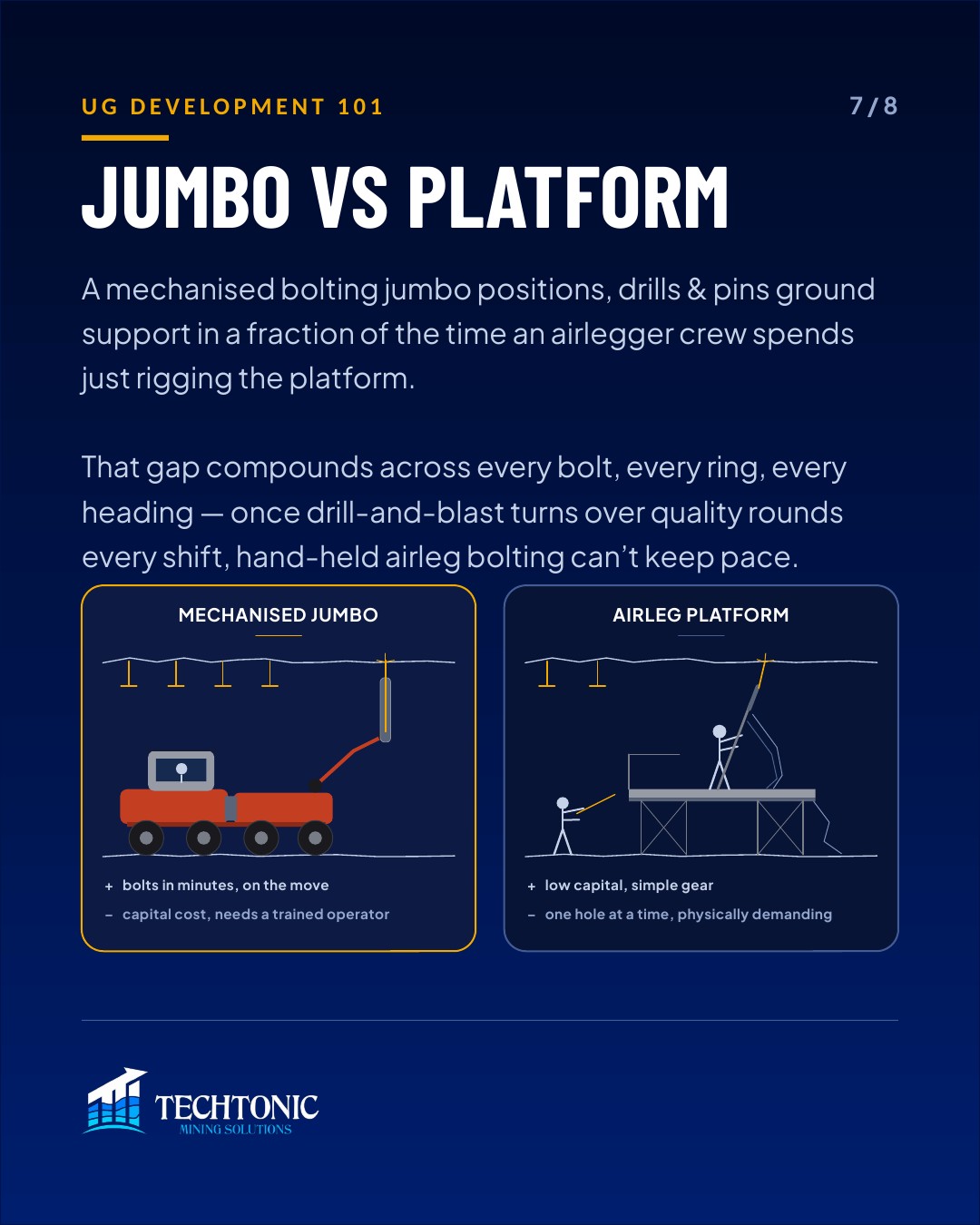
A mechanised bolting jumbo positions, drills and pins ground support in a fraction of the time an airleg crew spends just rigging the platform. That gap compounds across every bolt, every ring and every heading. Once drill and blast is turning over quality rounds every shift, hand-held airleg bolting cannot keep pace.
Staying alive
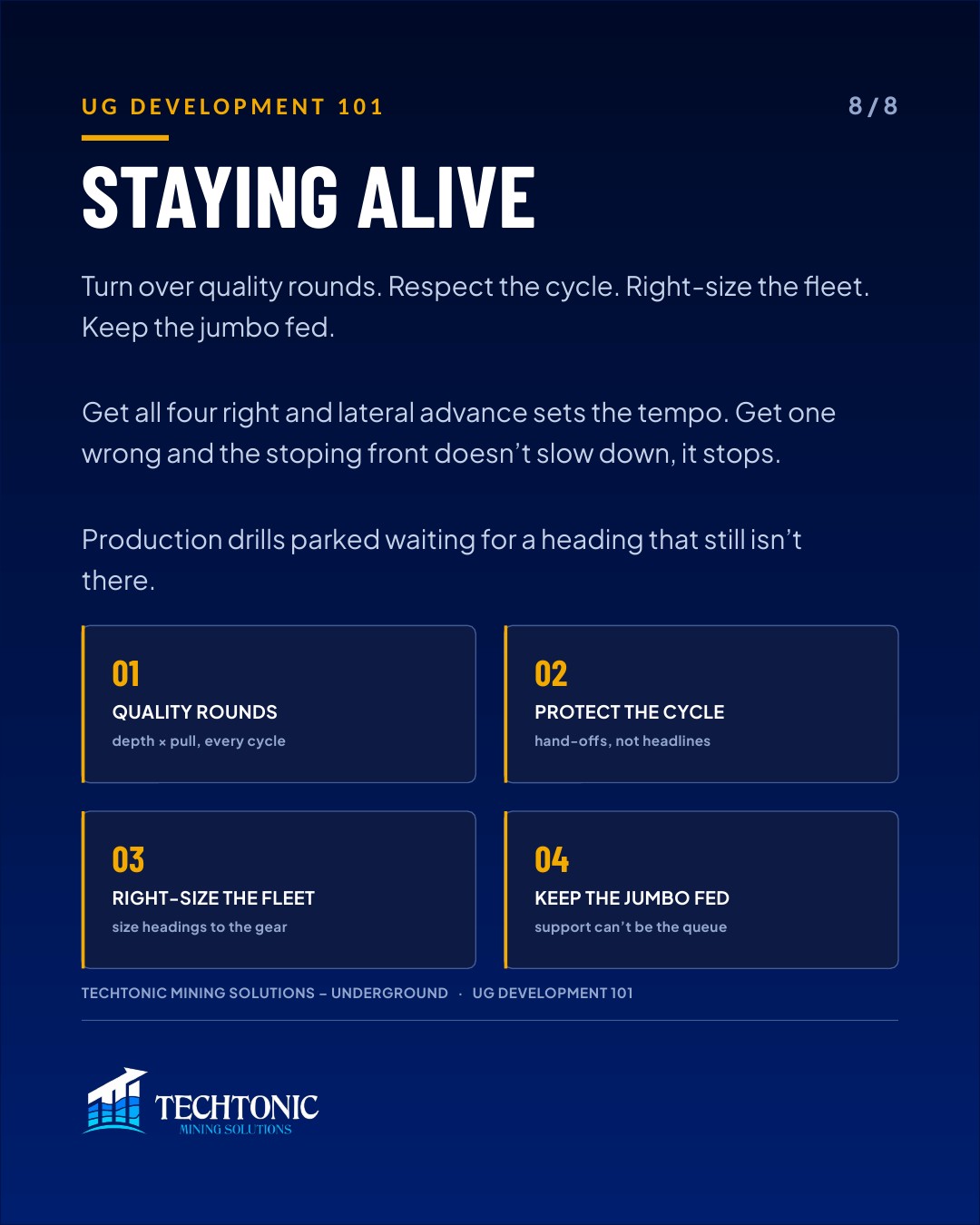
- Quality rounds — depth × pull, every cycle
- Protect the cycle — hand-offs, not headlines
- Right-size the fleet — size headings to the gear
- Keep the jumbo fed — support cannot be the queue
Get all four right and lateral advance sets the tempo. Get one wrong and the stoping front does not slow down, it stops: production drills parked, waiting for a heading that still is not there.
The carousel
This piece began as a LinkedIn carousel. The full deck is below — use the arrows, or click any slide to enlarge.