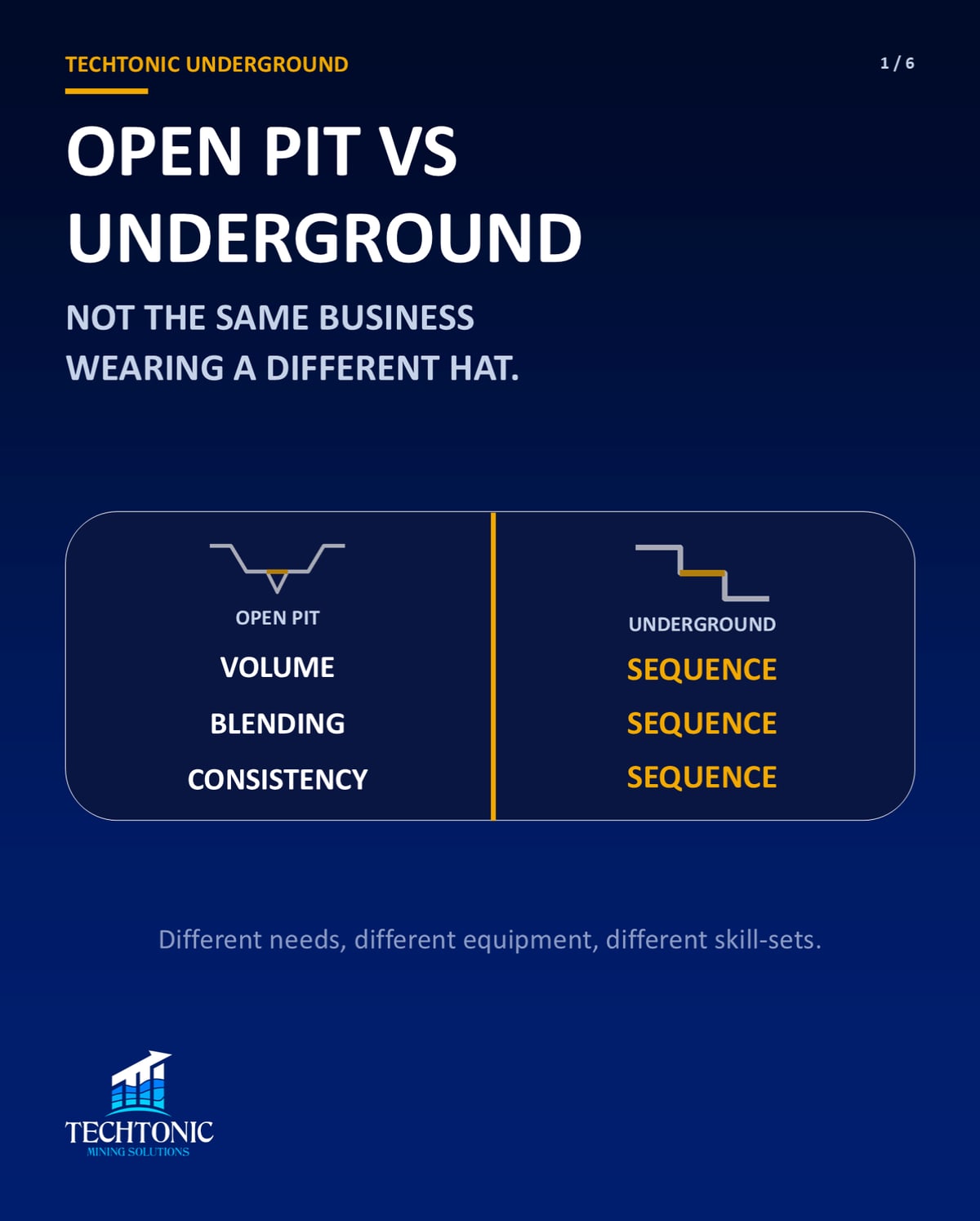
An open pit is a volume business. An underground mine is a chess game where the board fights back.
We watch experienced, genuinely capable open pit people get caught by this every year, because the instincts that made them good on surface point them at exactly the wrong lever underground.
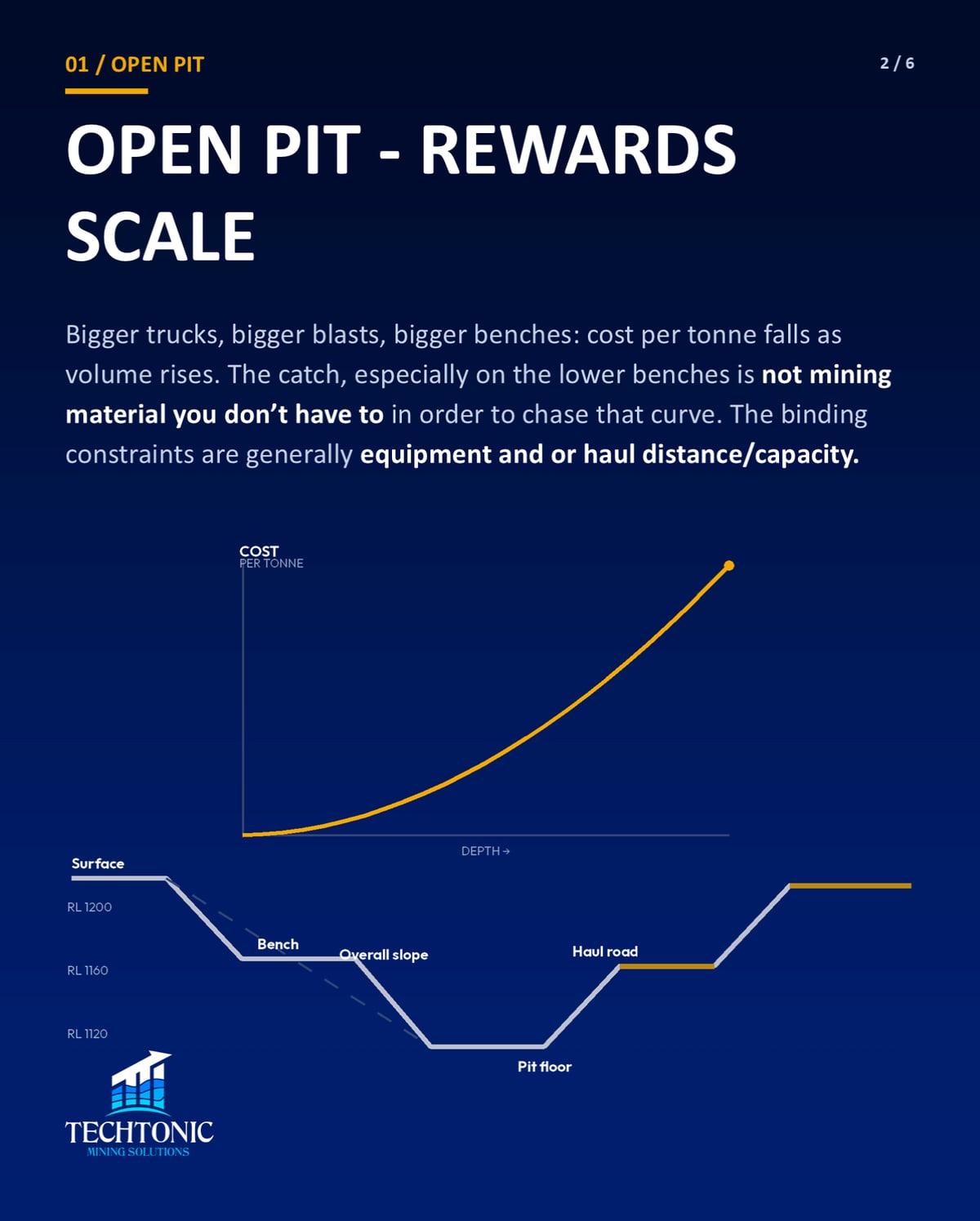
Open pit rewards scale
Bigger trucks, bigger blasts, bigger benches. Cost per tonne falls as volume rises. The binding constraint is usually iron — equipment and haul distance — and the way you beat it is to move more.
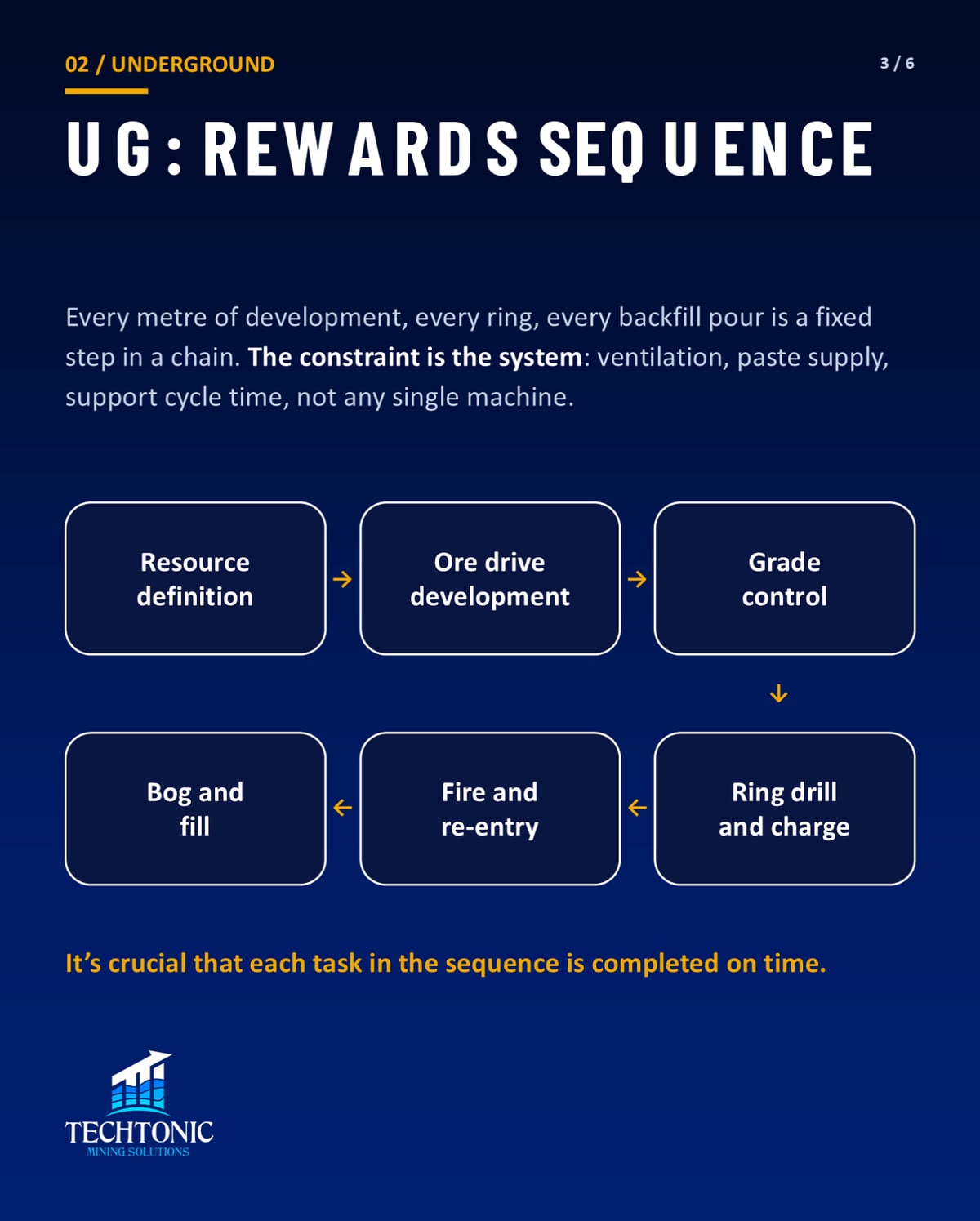
Underground rewards sequence
Every metre of development, every ring, every fill pour is a fixed step in a chain. The constraint is the system: ventilation, paste supply, support cycle time. It is almost never any single machine.
That difference is not a matter of degree. It changes which number you should be watching.
The classic miss
A surface-trained leader chases truck productivity while the real problem is that no stope is ready to fire. The trucks were never the constraint. The calendar was.
The other version of the same mistake is celebrating drill rate on a round that cannot be charged before shift change. Fast metres you cannot fire are just well-organised delay.
Why we split the teams
This is exactly why our underground capability sits as its own team rather than the pit team moonlighting. Different physics, different tempo, different playbook.
The short version: on surface you optimise machines. Underground you optimise the queue.
Made the jump yourself? We would be interested to know what caught you.
The carousel
This piece began as a LinkedIn carousel. The full deck is below — use the arrows, or click any slide to enlarge.