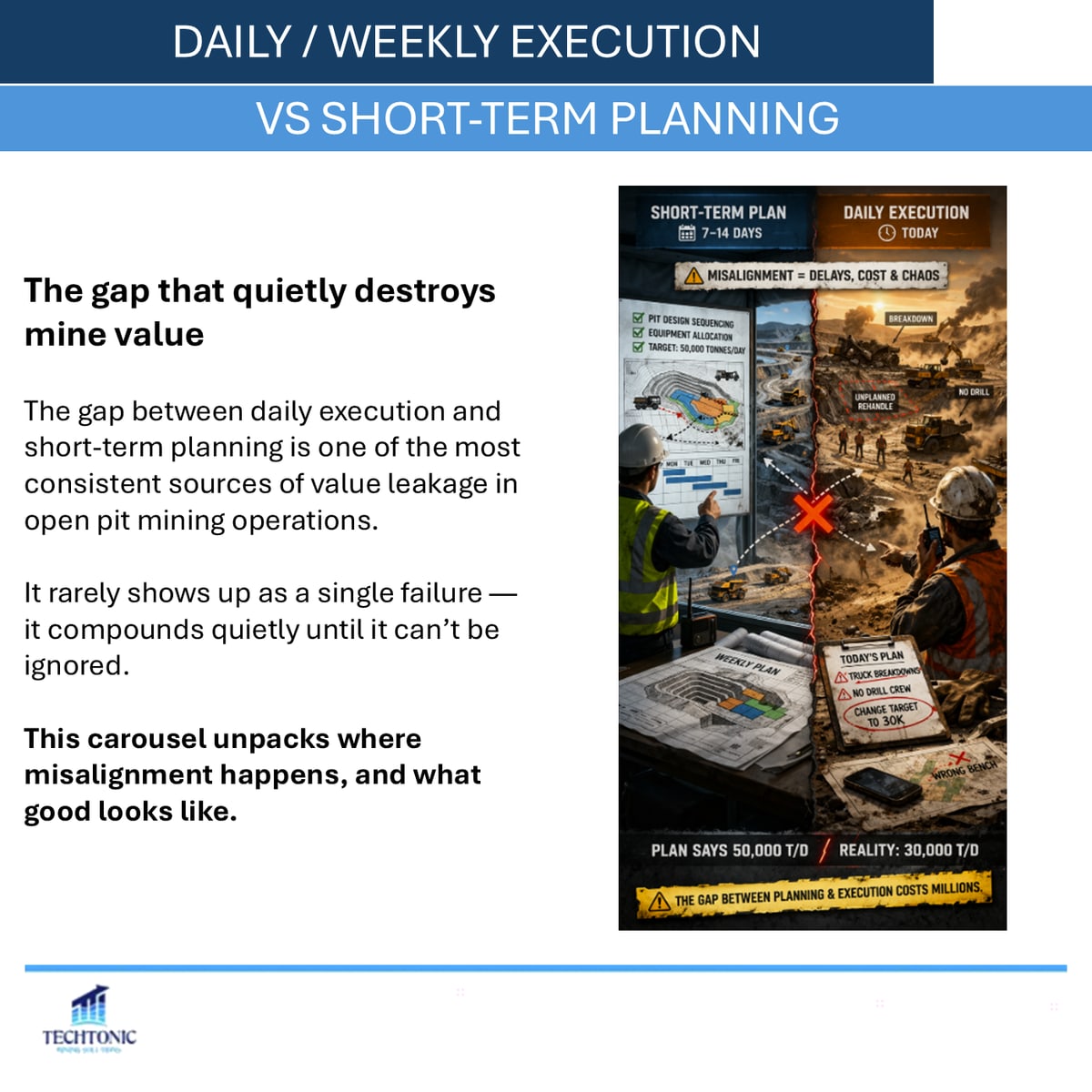
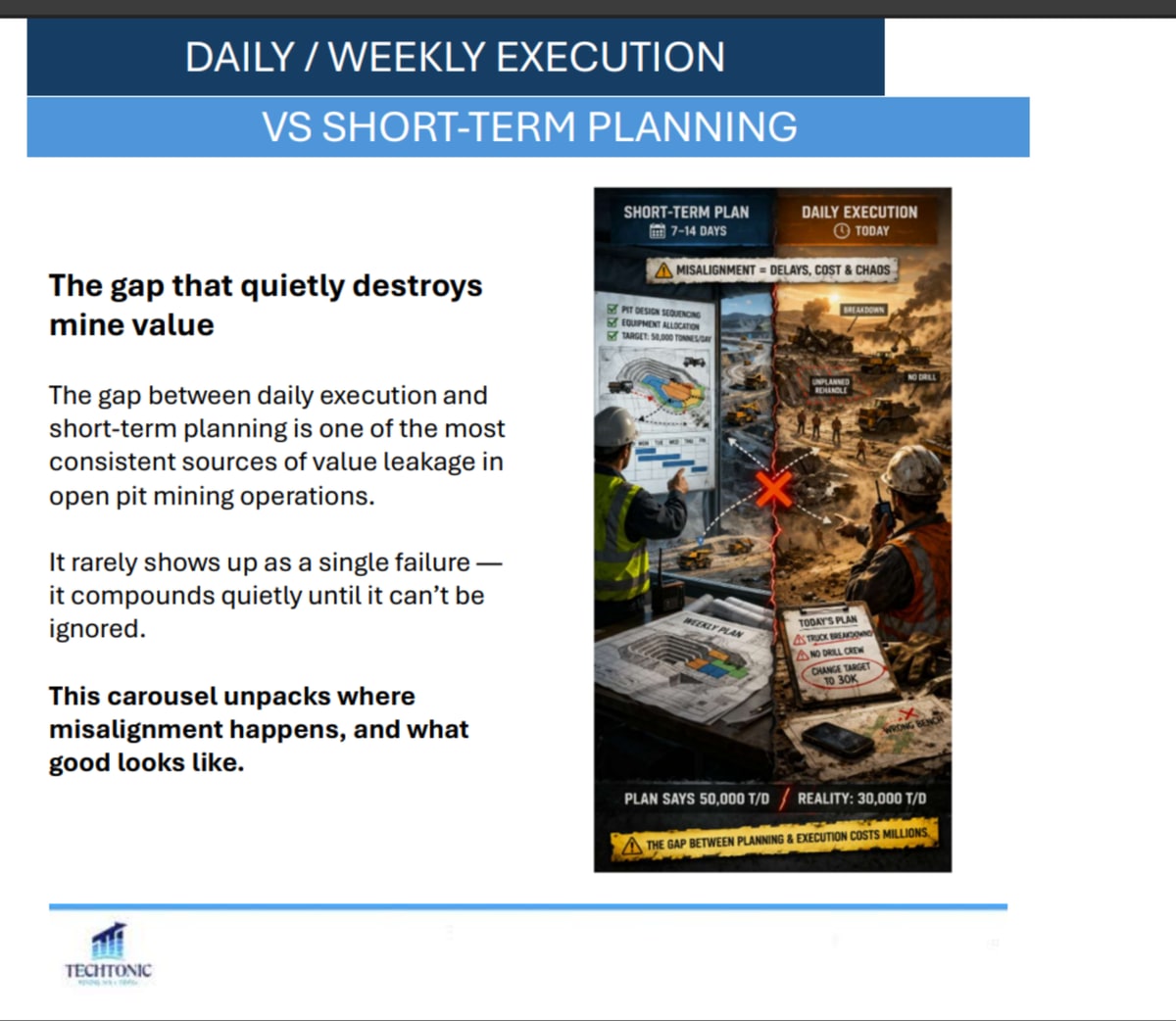
The gap between daily execution and short-term planning is one of the most consistent sources of value leakage in open pit mining. It rarely presents as a single failure. It compounds quietly until it cannot be ignored.
Two horizons, two jobs
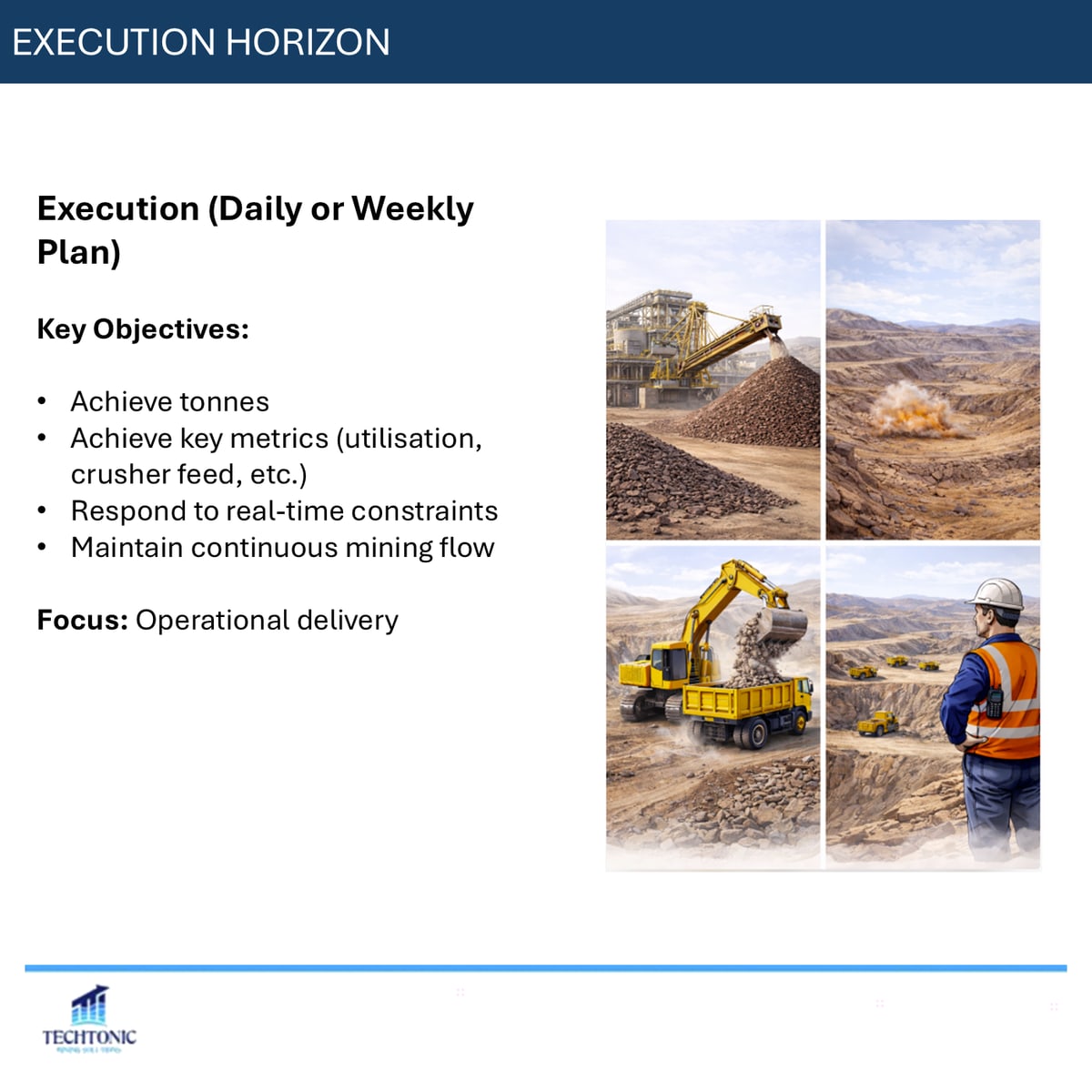
The daily or weekly plan exists to deliver. Achieve tonnes, hit the metrics that matter — utilisation, crusher feed — respond to real-time constraints, and keep mining flowing. Its focus is operational delivery.
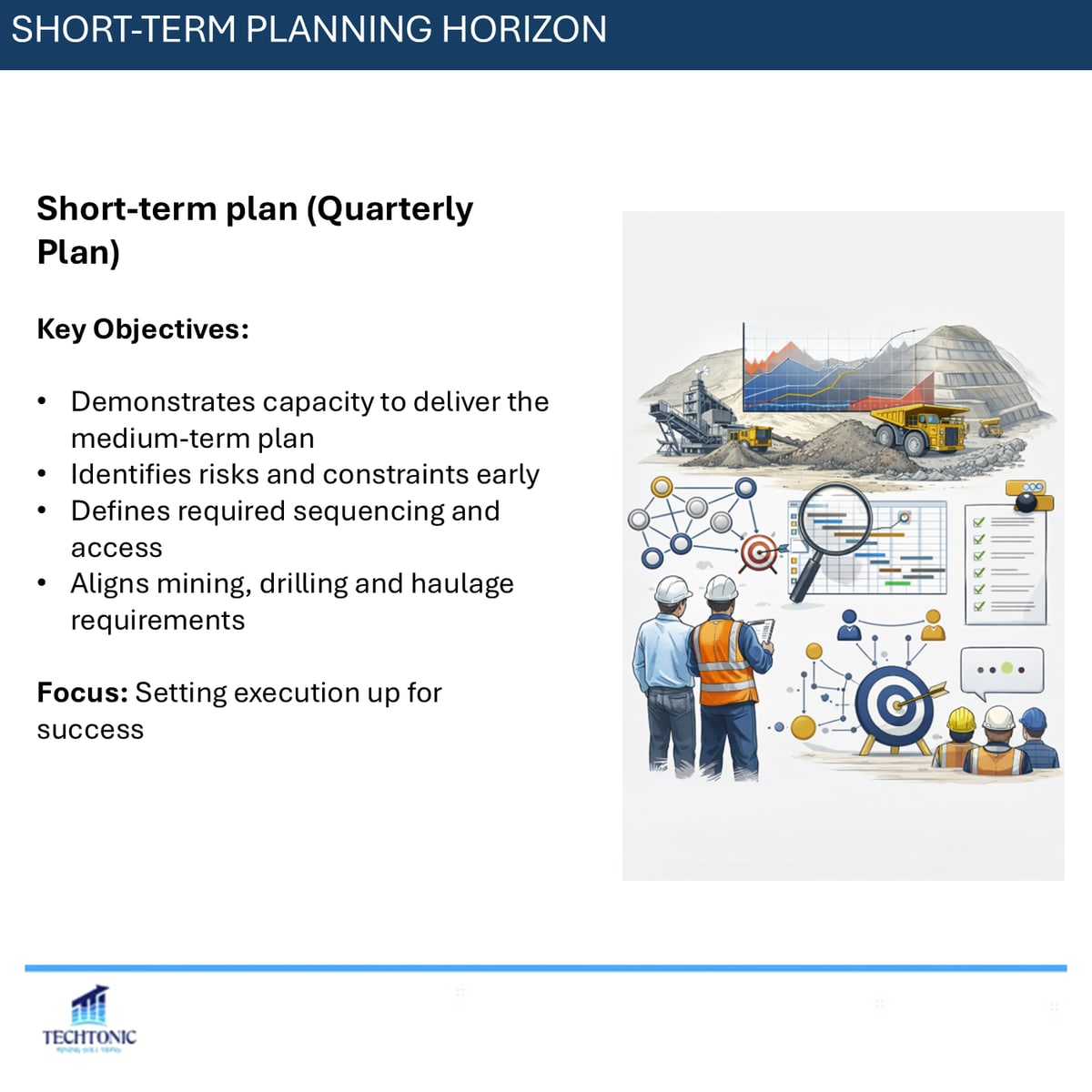
The short-term plan, typically quarterly, has a different job. It demonstrates capacity to deliver the medium-term plan, identifies risks and constraints early, defines the sequencing and access required, and aligns mining, drilling and haulage. Its focus is setting execution up for success.
Both are legitimate. The trouble starts when the second stops informing the first.
Where the misalignment shows up
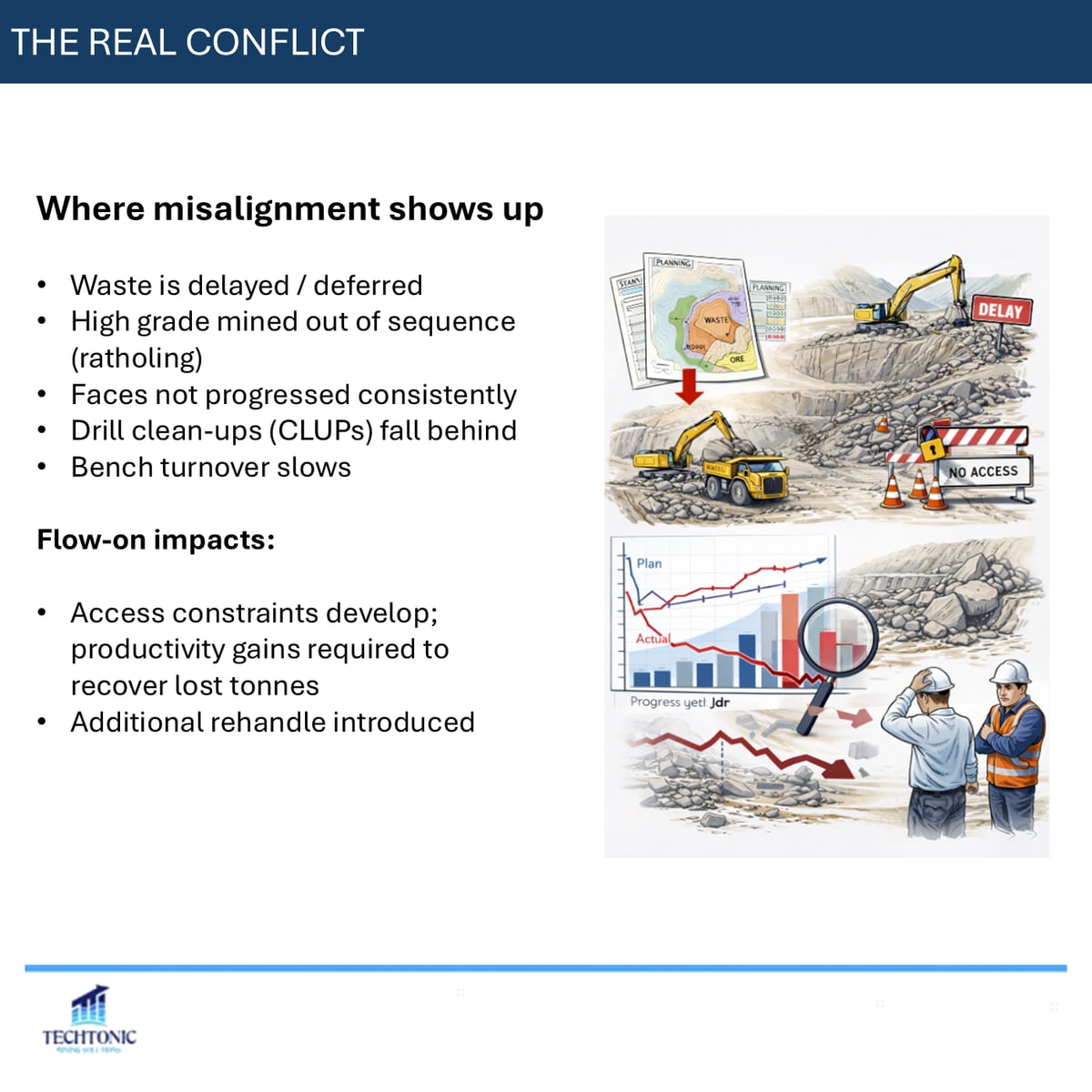
Waste gets delayed or deferred, because waste is rarely what today is being measured on. High grade gets mined out of sequence — ratholing — because it solves an immediate feed problem. Faces stop progressing consistently. Drill clean-ups fall behind. Bench turnover slows.
None of those look like a crisis on the day. Each one is a reasonable decision made under pressure. The flow-on is that access constraints develop, and recovering the lost tonnes then requires productivity gains that were never in anyone’s plan. Rehandle gets introduced to bridge the gap.
The compounding effect
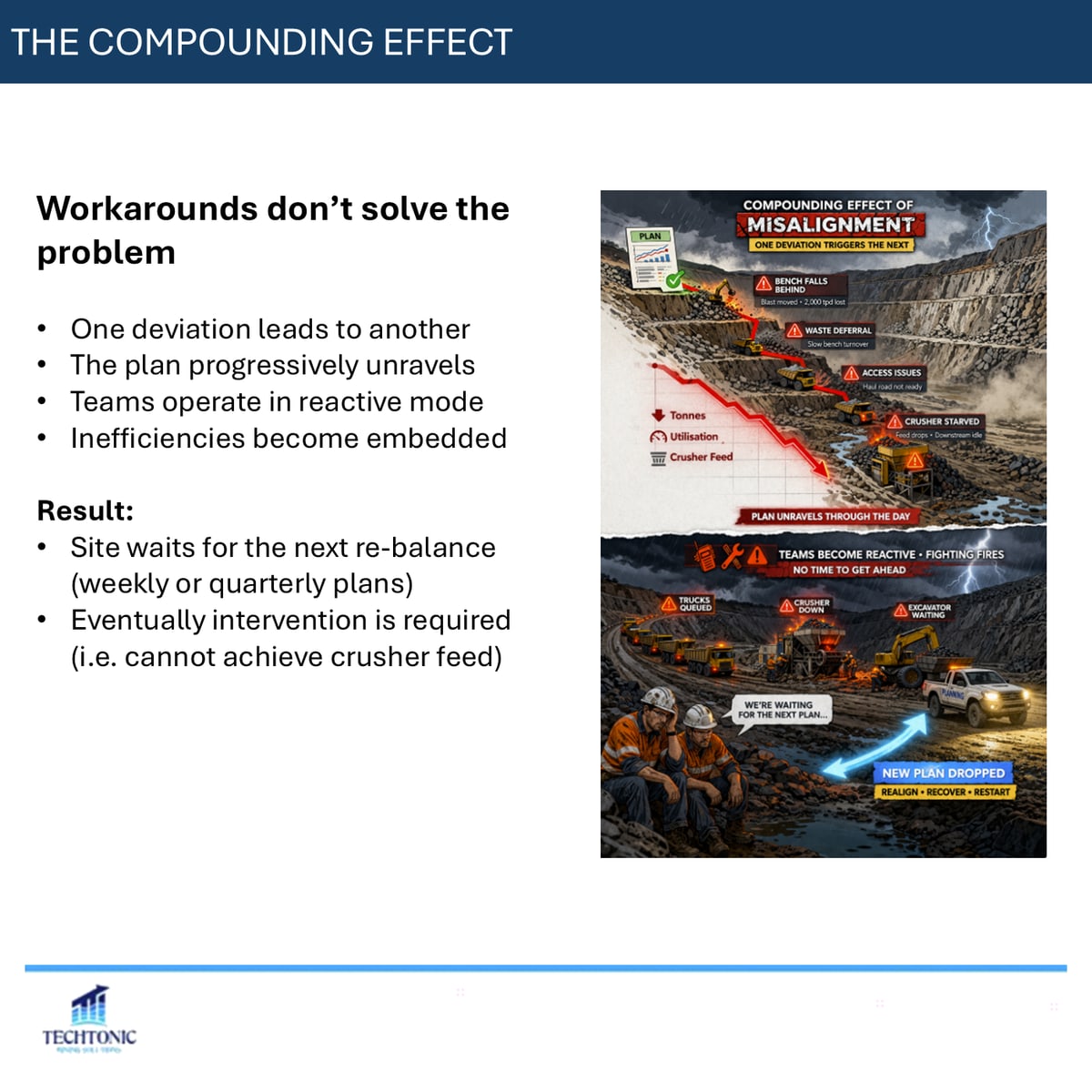
The problem with workarounds is that they do not solve anything, they defer it. One deviation leads to the next. The plan progressively unravels and teams shift into reactive mode, where the inefficiencies stop being exceptions and become how the site runs.
At that point the operation is waiting for the next re-balance, weekly or quarterly, to reset. Often it does not reset on its own, and someone has to intervene because crusher feed can no longer be achieved.
What good looks like
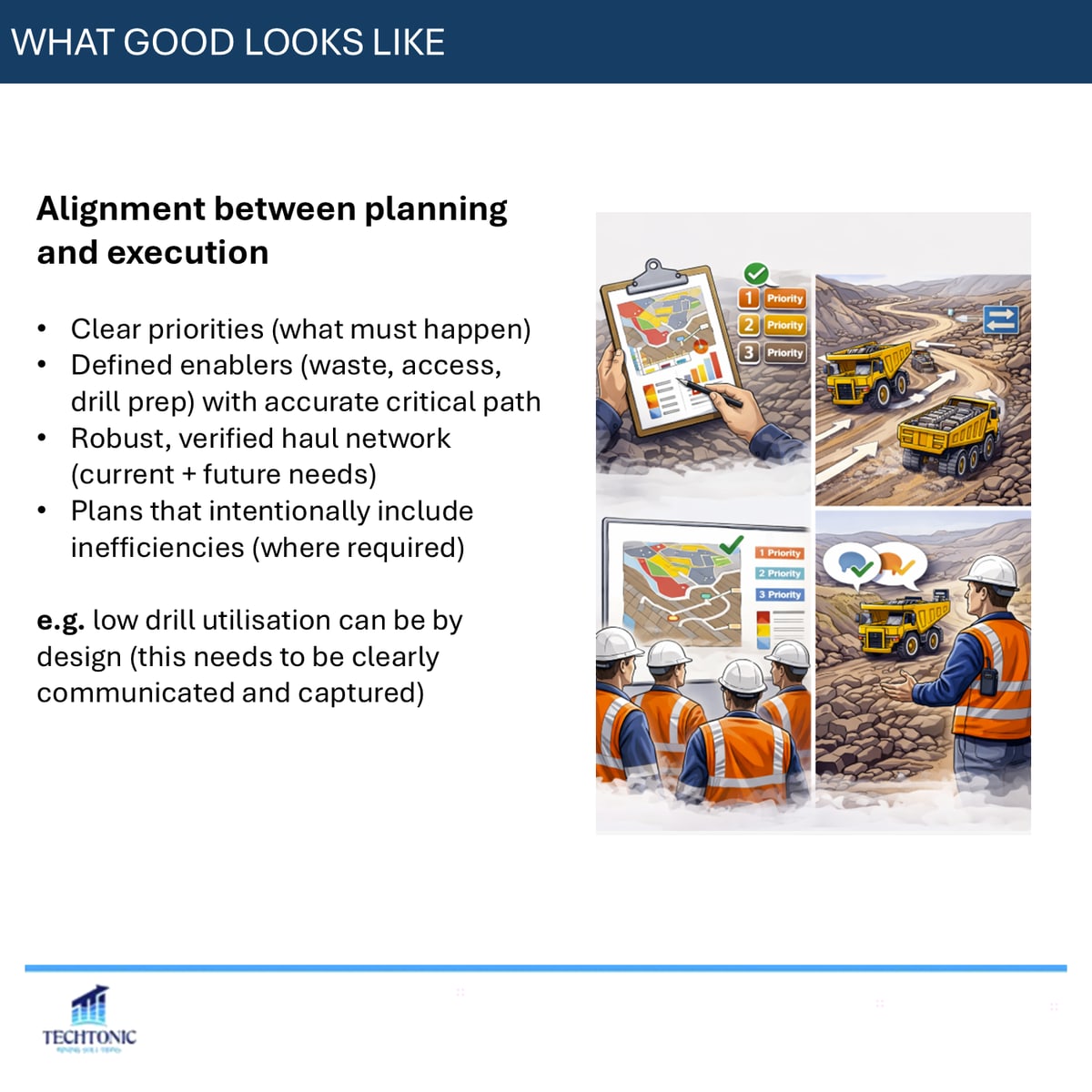
Clear priorities, so everyone knows what must happen rather than what would be nice to happen. Defined enablers — waste, access, drill preparation — with an accurate critical path through them. A haul network that has been verified against current and future needs rather than assumed.
And plans that deliberately include inefficiency where it is real. Low drill utilisation can be entirely by design. If it is, that needs to be stated and captured, otherwise someone will spend a month trying to fix a number that was never a problem.
The link that matters
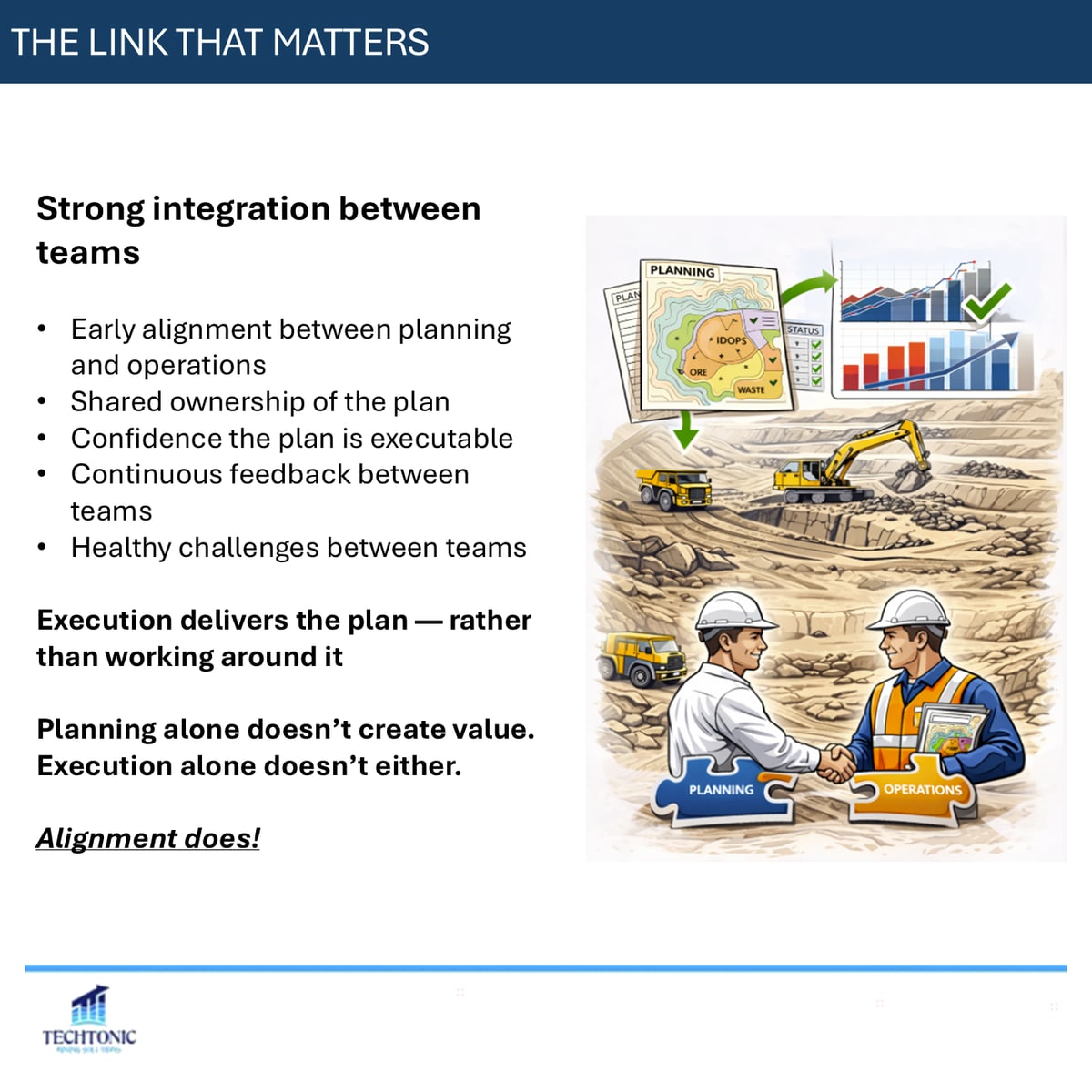
Early alignment between planning and operations. Shared ownership of the plan. Enough confidence in it that the execution team believes it is achievable. Continuous feedback in both directions, and healthy challenge between the two groups rather than polite agreement followed by a different plan on the ground.
The measure is simple enough. Execution should be delivering the plan, not working around it.
Planning alone does not create value. Execution alone does not either. Alignment does.
How aligned are your planning and execution teams this week?
The carousel
This piece began as a LinkedIn carousel. The full deck is below — use the arrows, or click any slide to enlarge.