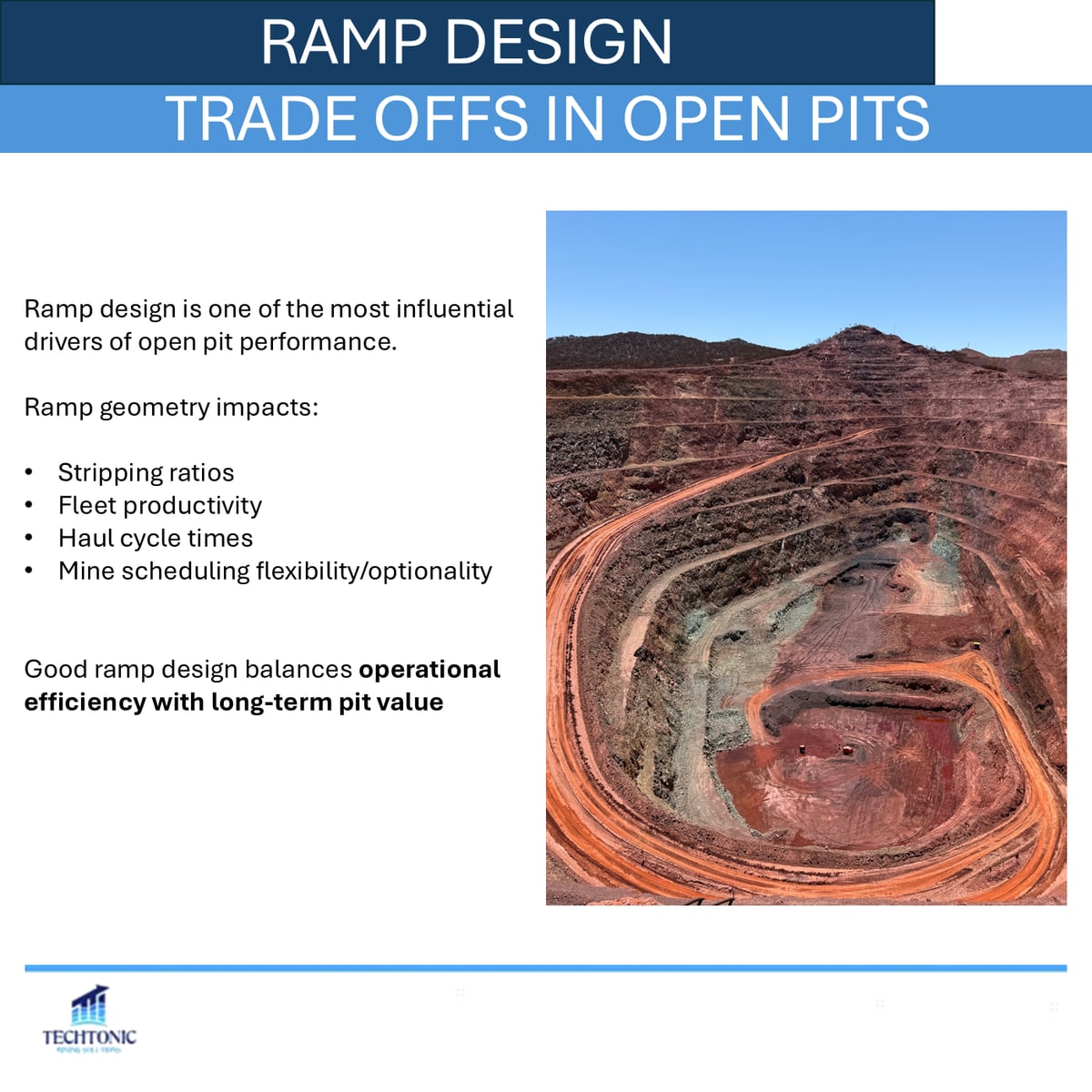
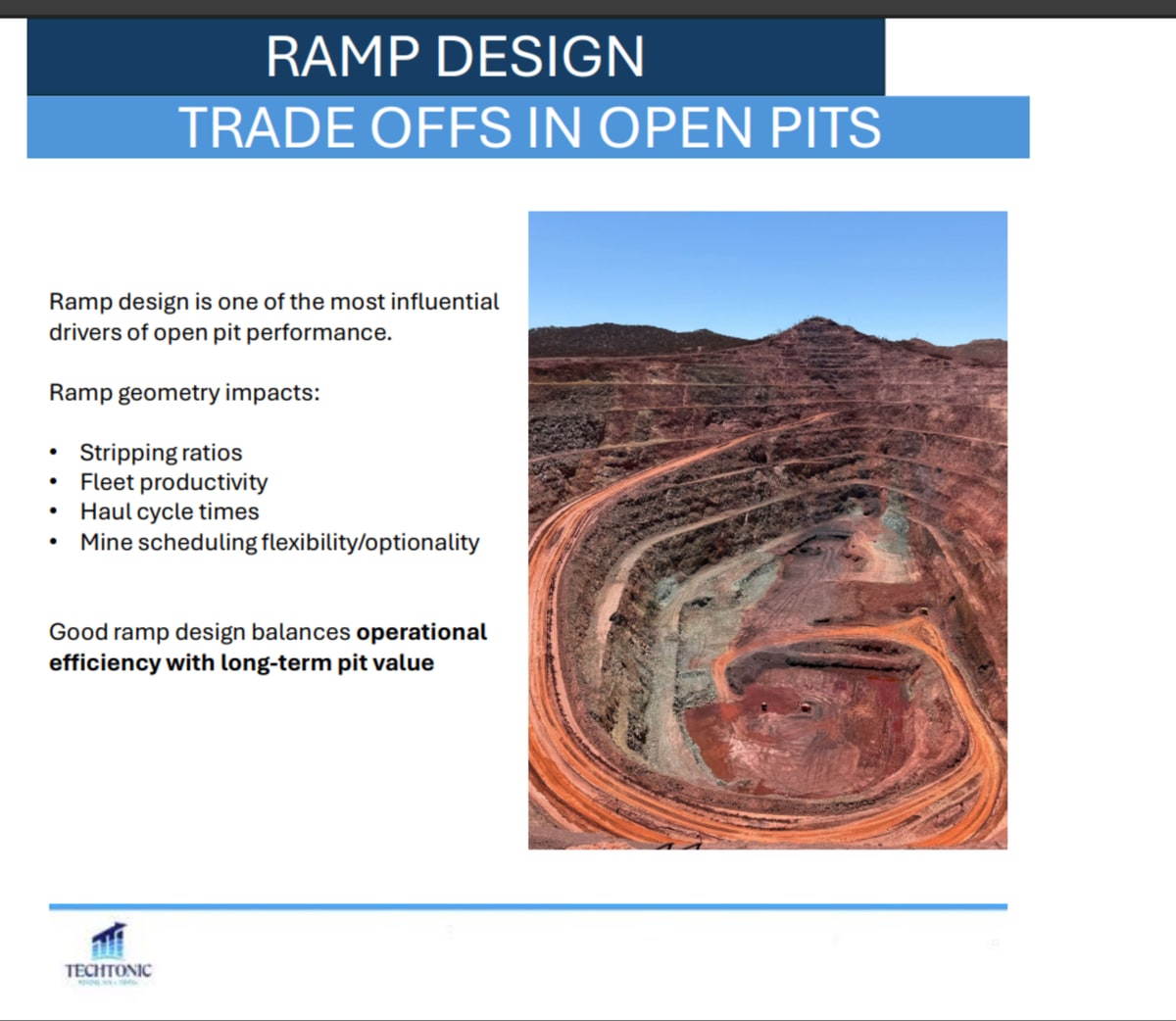
Ramp design is one of the most influential drivers of open pit performance, and one of the easiest to treat as a fixed rule rather than a decision. Ramp geometry sets stripping ratios, fleet productivity, haul cycle times and how much flexibility the schedule has later on. Get it right and it improves the value of the whole project.
Truck class against ramp width
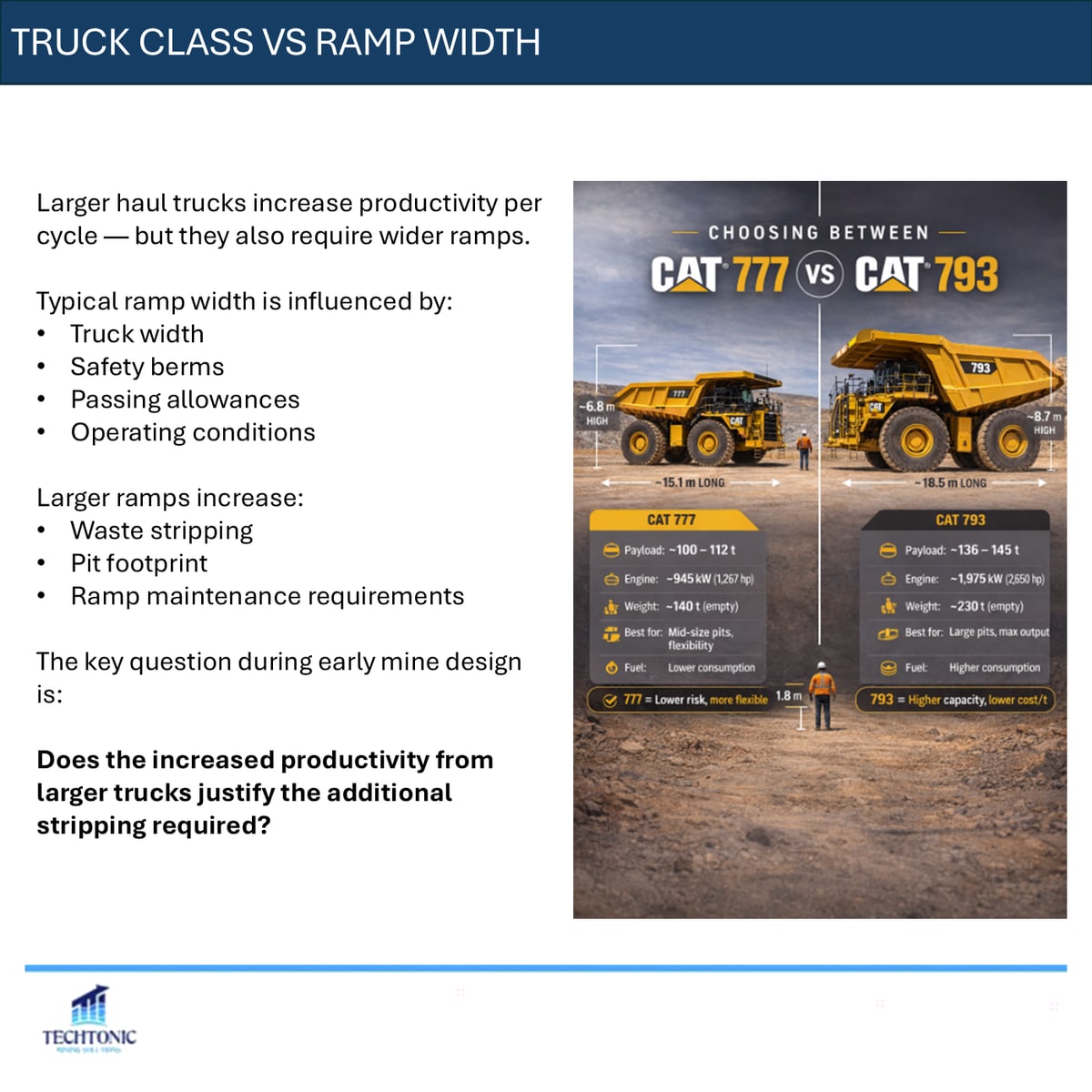
Bigger trucks move more per cycle. They also need wider ramps, and ramp width is driven by truck width, safety berms, passing allowances and operating conditions.
Wider ramps mean more waste stripping, a larger pit footprint and more ramp maintenance. So the question at early design is not which truck is most productive, it is whether the productivity gain from the larger truck justifies the additional stripping required to run it. Those are different questions and they do not always have the same answer.
Single against dual access
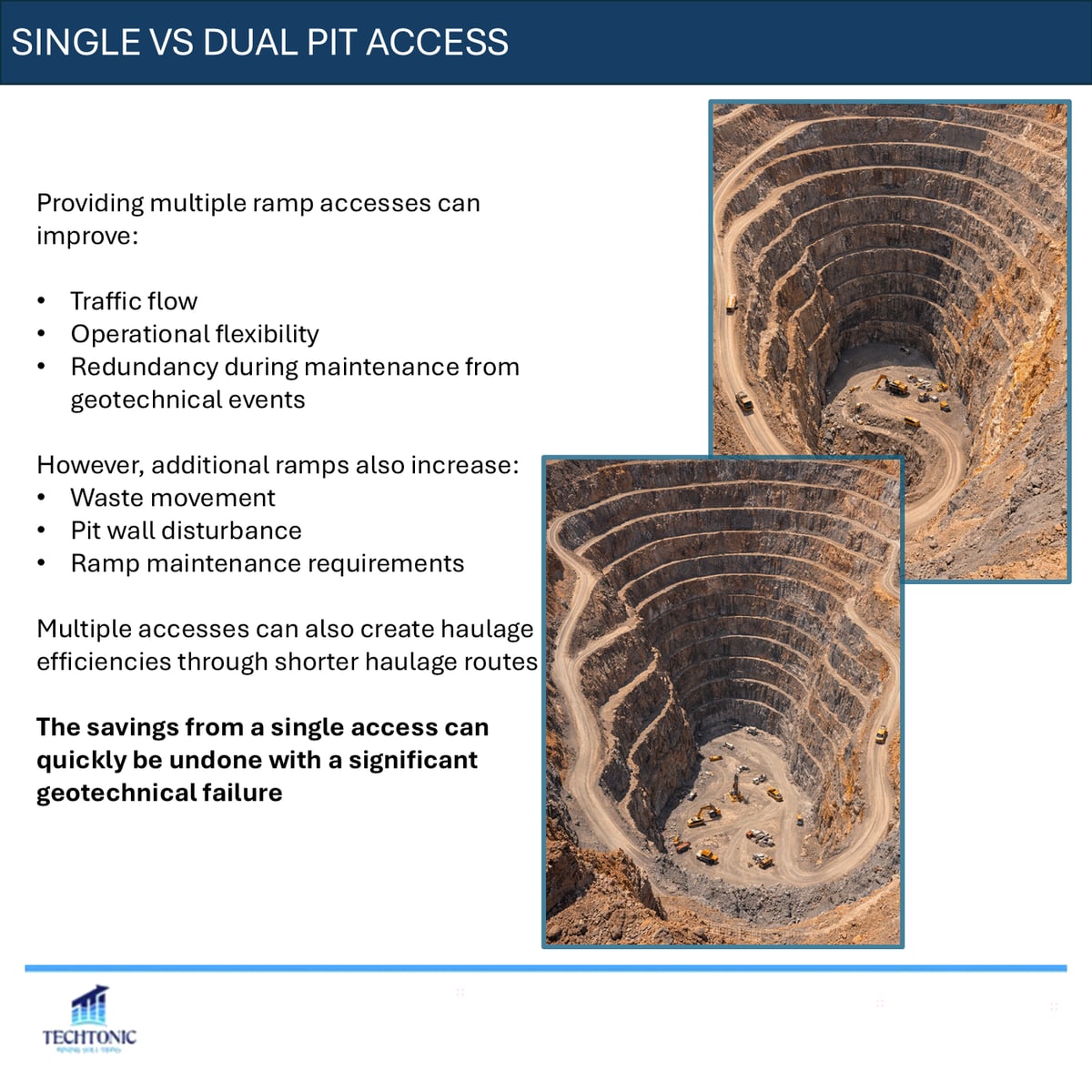
A second ramp access improves traffic flow, gives operational flexibility, and provides redundancy during maintenance or after a geotechnical event. Multiple accesses can also shorten haul routes, which is a productivity gain in its own right.
The cost is more waste movement, more pit wall disturbance and more ramp maintenance. Worth weighing carefully, though: the savings from committing to a single access can be undone very quickly by one significant geotechnical failure, at which point the redundancy you did not build is the only thing you want.
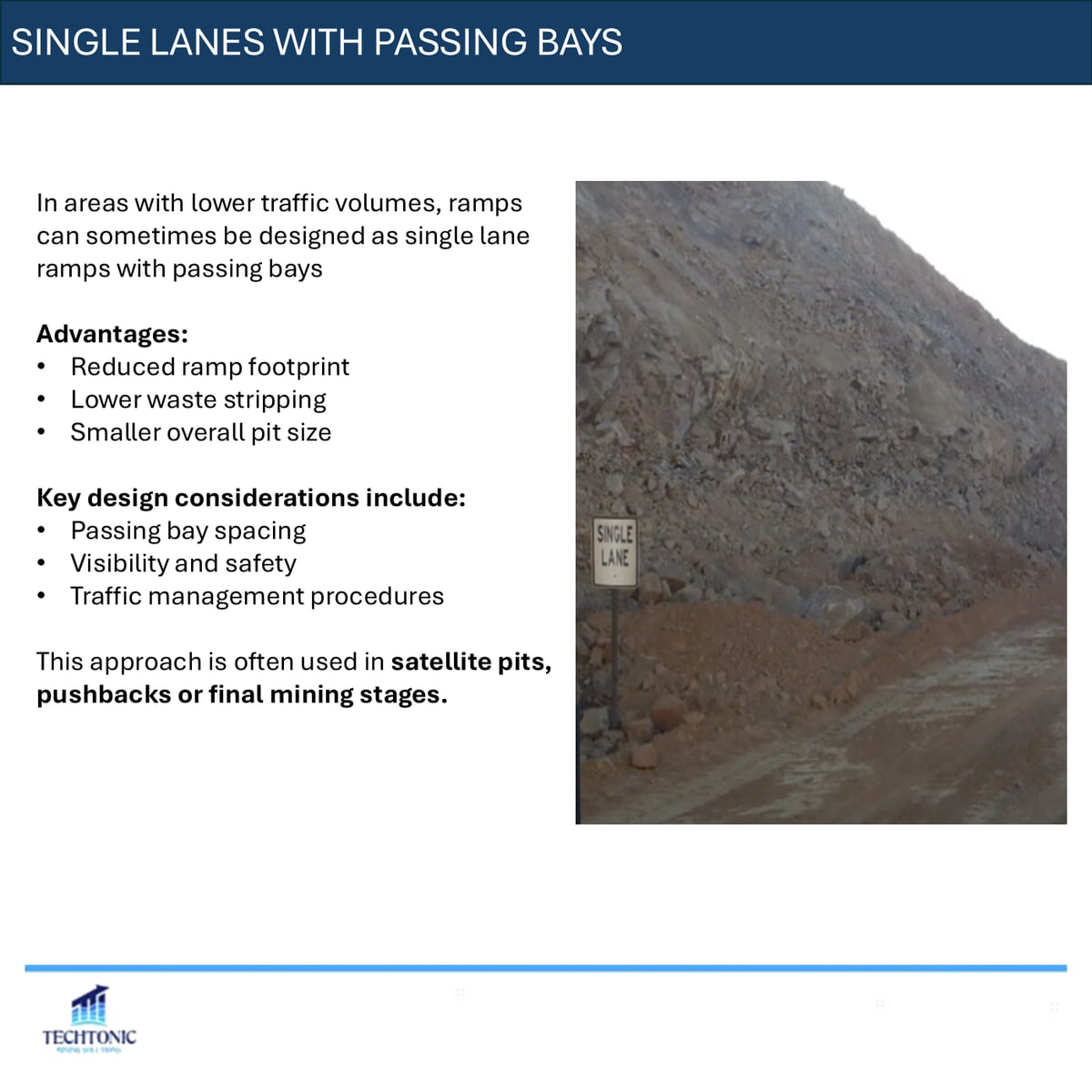
Single lanes with passing bays
Where traffic volumes are lower, a single lane ramp with passing bays can do the job. It reduces the ramp footprint, cuts waste stripping and keeps the overall pit smaller.
The design work moves into passing bay spacing, visibility and safety, and the traffic management procedures that make it workable. This approach tends to earn its place in satellite pits, pushbacks, and final stages of mining.
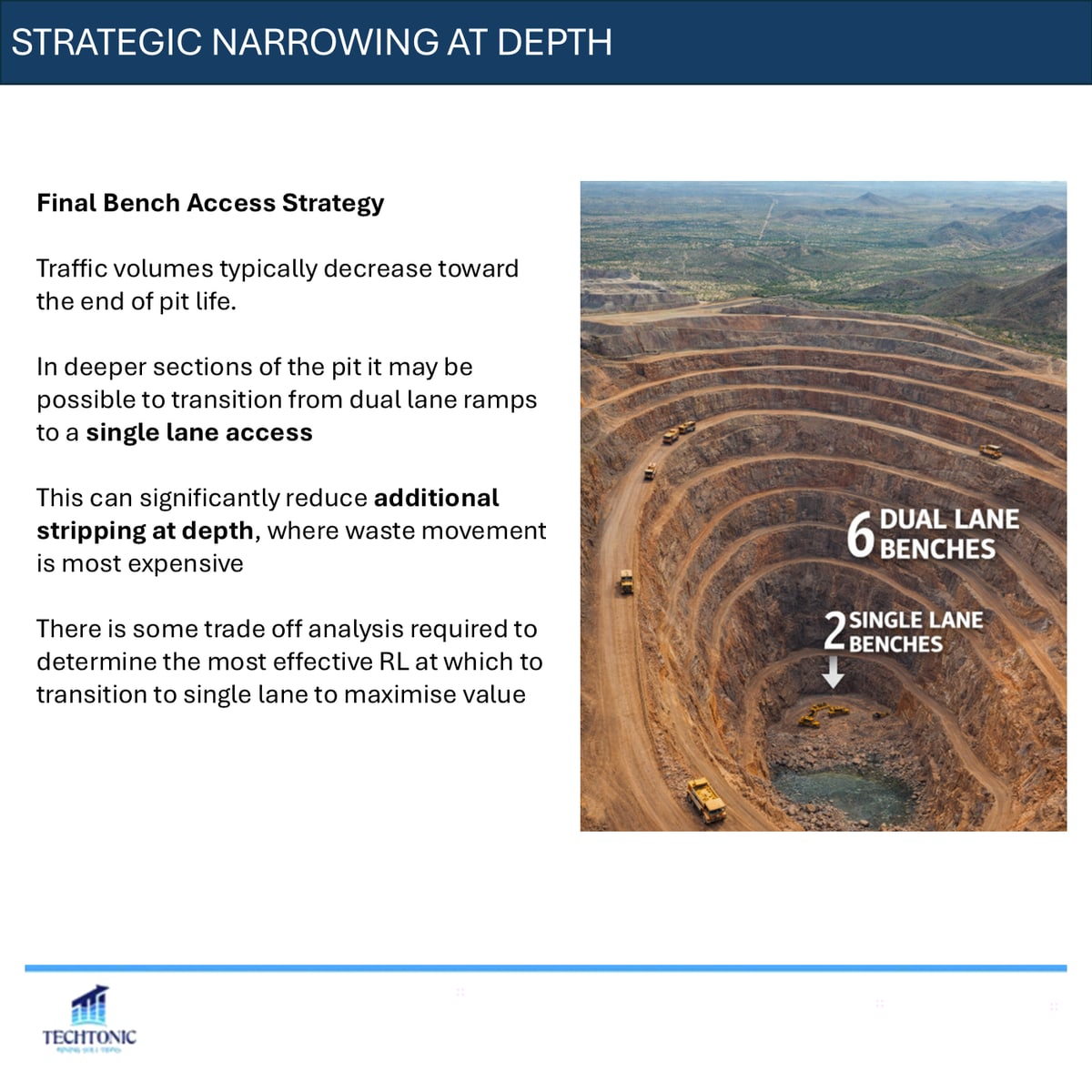
Narrowing at depth
Traffic volumes usually fall towards the end of pit life. In the deeper parts of the pit it is often possible to transition from dual lane to single lane access, and that is exactly where it is worth the most, because waste movement at depth is the most expensive waste movement you do.
The question is which RL to make the transition at. That takes trade-off analysis rather than a rule, since moving it up or down changes both the stripping saved and the haulage constraint you create.
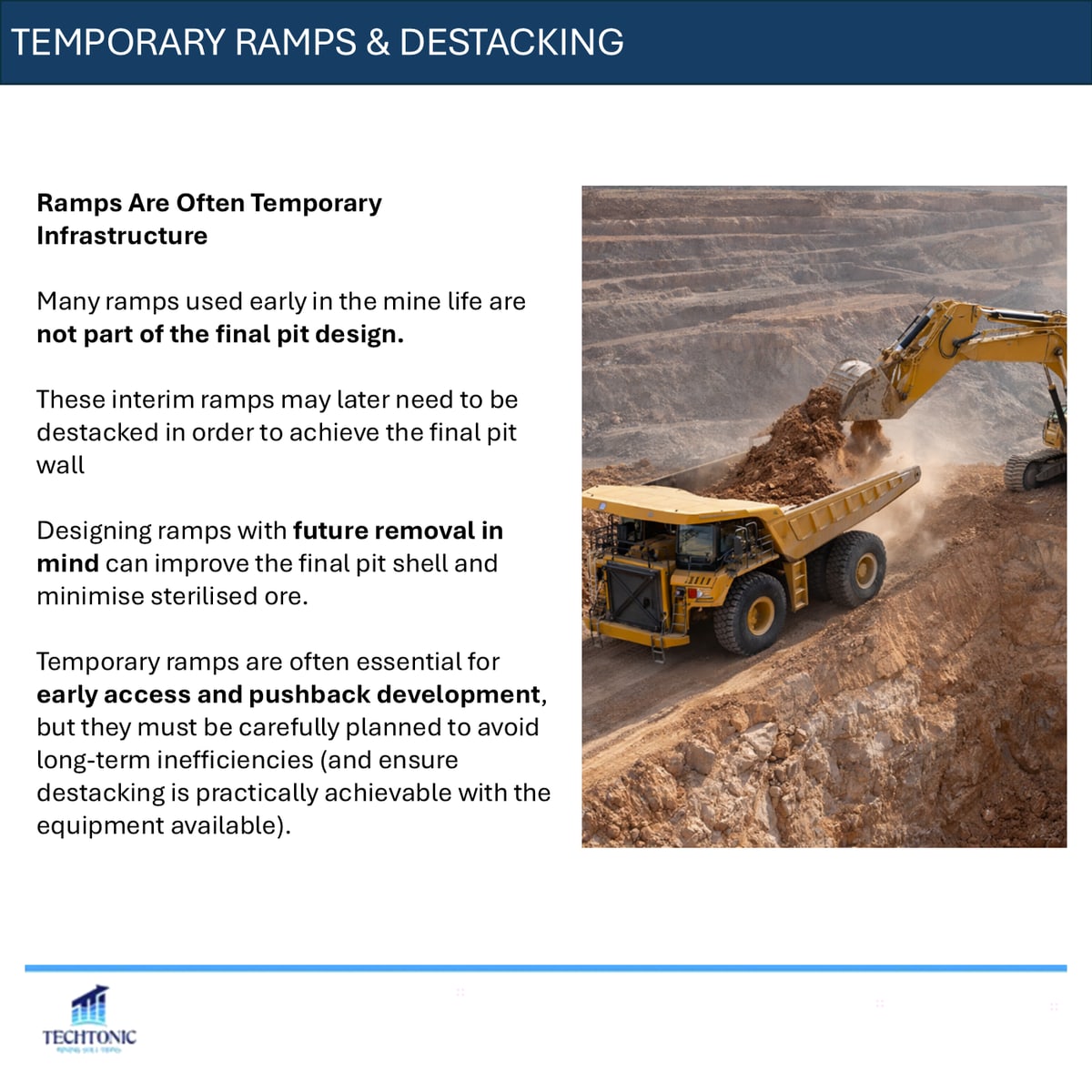
Ramps are often temporary infrastructure
Many ramps used early in mine life are not part of the final pit design at all. They exist to get access and to develop pushbacks, and they later have to be destacked to achieve the final wall.
Designing them with their eventual removal in mind improves the final pit shell and reduces sterilised ore. It is also worth checking that destacking is practically achievable with the equipment you will have at that point, rather than assuming it can be dealt with later.
Ramp design is a system problem
Ramp decisions interact with fleet selection, pit optimisation, pushback design, waste dump locations and the schedule. Change one and the others move.
Which is why fixed design rules tend to underperform. The most effective ramp strategies come from looking at the entire mining system rather than applying a standard width and moving on.
When was the last time your ramp standards were tested against the value they create, rather than the rule they came from?
The carousel
This piece began as a LinkedIn carousel. The full deck is below — use the arrows, or click any slide to enlarge.