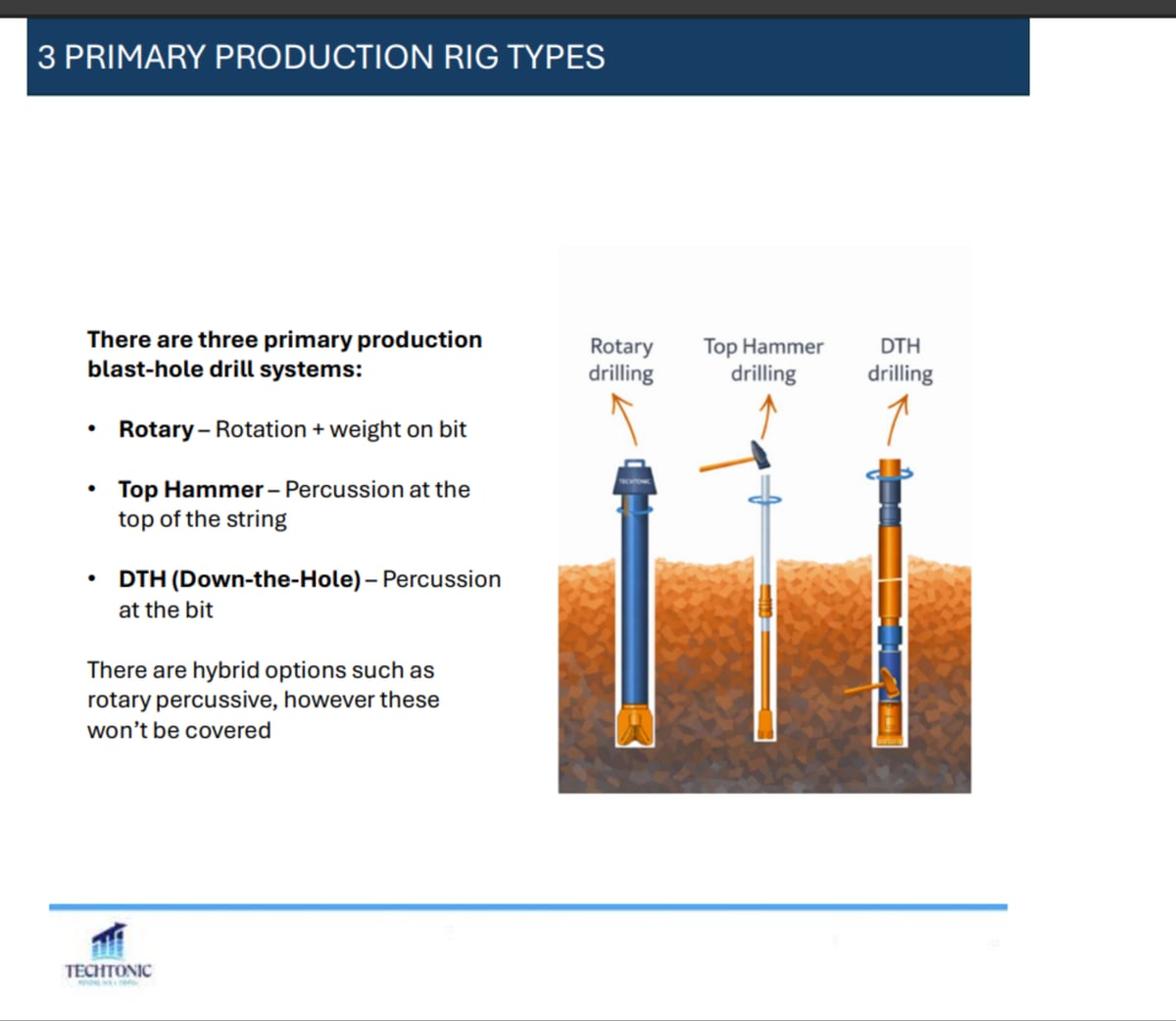
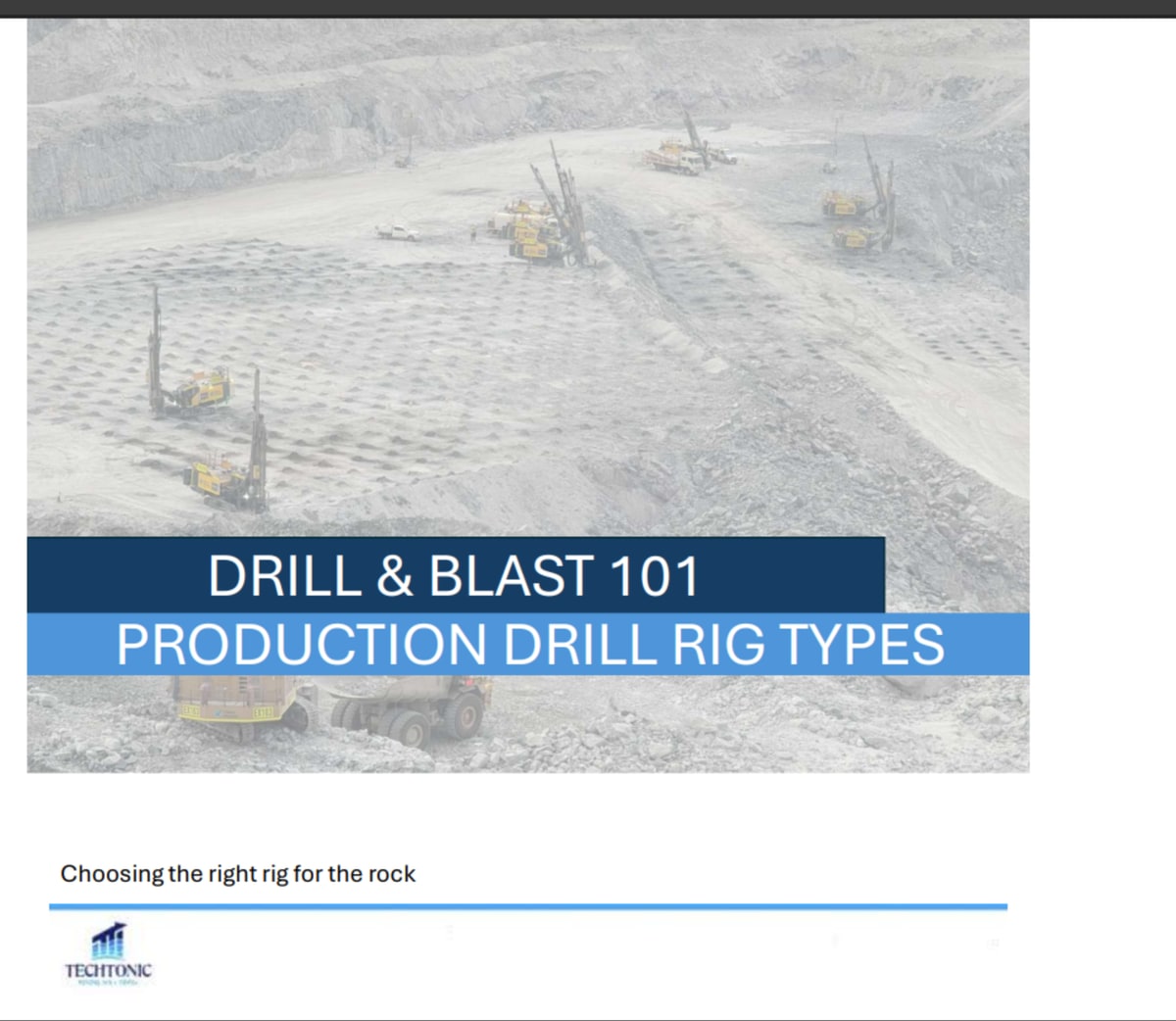
There are three primary production blast-hole drill systems in open pit mining: rotary, top hammer, and down-the-hole. Hybrids exist — rotary percussive among them — but the three cover most of what you will encounter.
The choice matters more than it might appear, because it is generally only a live decision at the commencement of an operation. After that you are working with the fleet you have.
Rotary
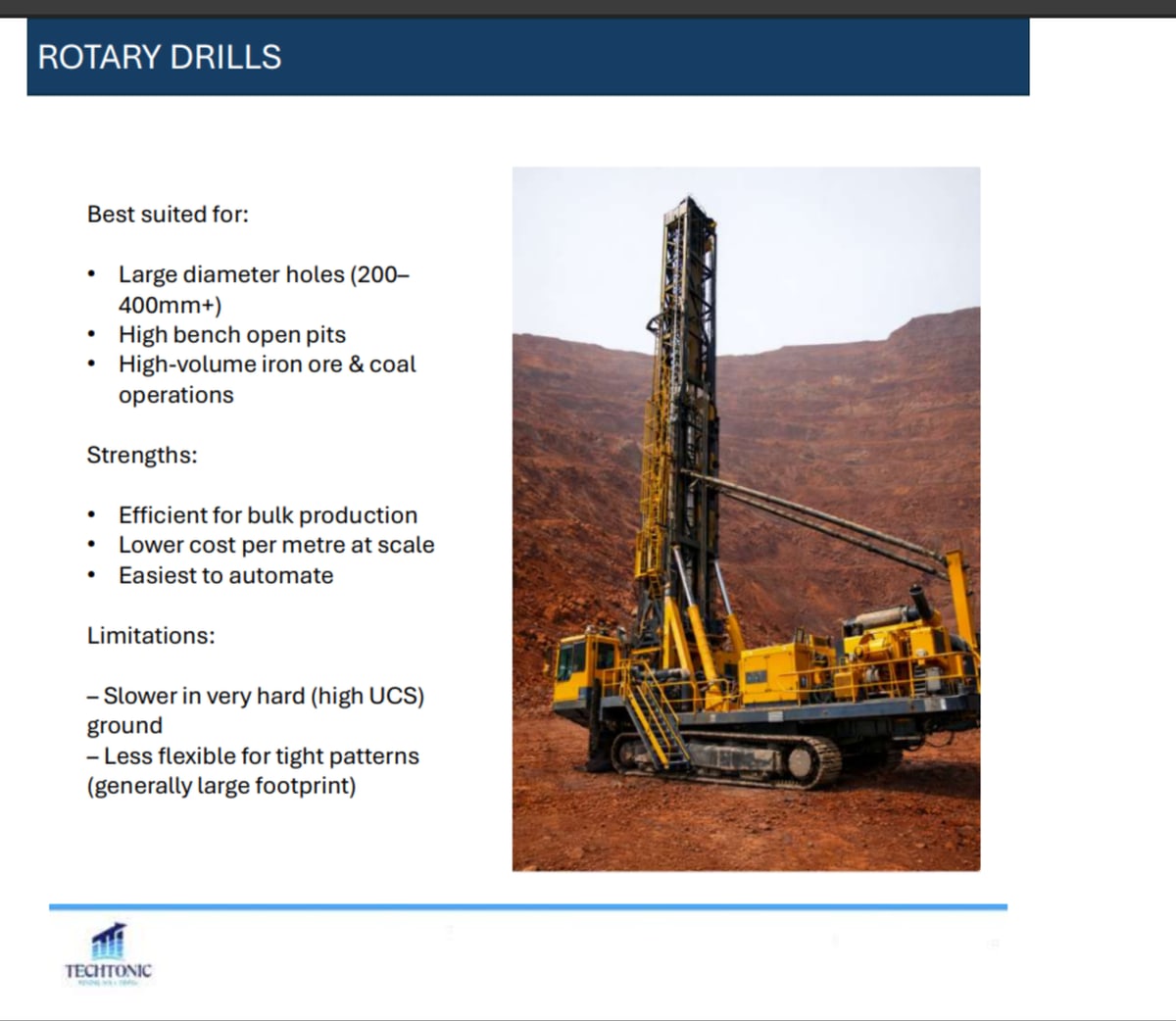
Rotation plus weight on bit. Rotary rigs suit large diameter holes, from around 200mm up past 400mm, on high benches. They are the standard in high-volume iron ore and coal operations.
They are efficient for bulk production, deliver a lower cost per metre at scale, and are the easiest of the three to automate. They slow down in very hard ground with high unconfined compressive strength (UCS), and their footprint makes them less flexible where patterns are tight.
Top hammer
Percussion applied at the top of the drill string. Suited to smaller diameter holes, presplit and trim work, shallow benches, and quarry or smaller-scale operations.
Lower capital cost, mobile, versatile, and accurate at shallow depth. The limitation is inherent to the design: energy is lost down the string, so performance drops with depth and hole deviation increases as holes get deeper.
Down-the-hole
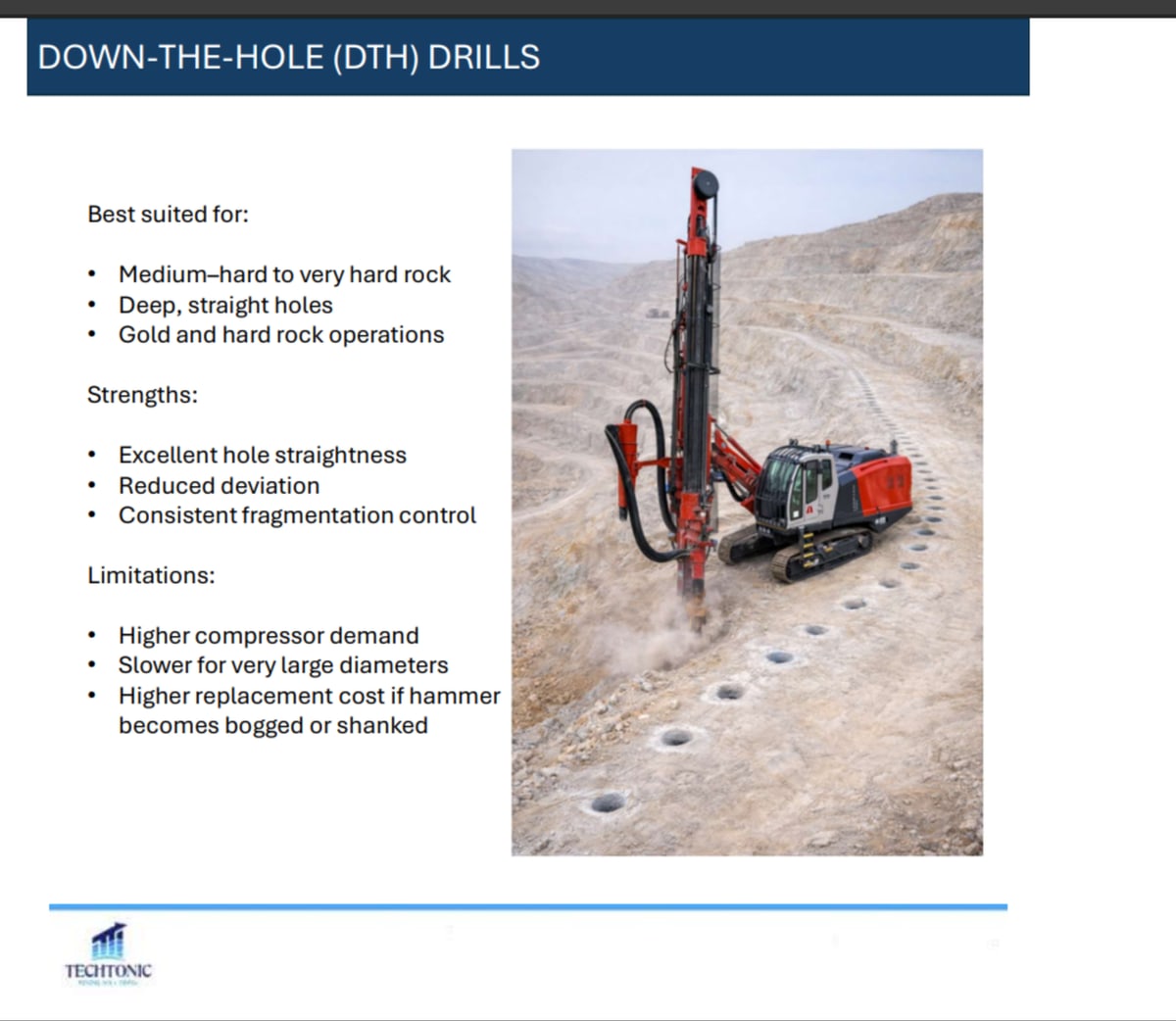
Percussion delivered at the bit rather than the top of the string, which removes the energy loss problem that limits top hammer at depth. DTH suits medium-hard through to very hard rock, and deep holes that need to stay straight. It is common in gold and hard rock operations.
Hole straightness is the main advantage, and reduced deviation flows straight through into more consistent fragmentation. The costs are a higher compressor demand, slower progress at very large diameters, and a meaningful replacement bill if a hammer becomes bogged or shanked.
What actually drives the decision
Rig selection is not purely a geology question. Rock strength matters, but so do the fragmentation you need, bench height, powder factor targets, and how the drill fleet matches the load and haul fleet it is feeding.
Then there is cost per tonne against cost per metre, which are not the same conversation and are frequently confused. And design requirements shape it as well — presplit, shield blasting, batter and buffer rows, trim shots all ask different things of a rig. Availability of fleet is often the practical constraint that settles it.
The decision does not stay in the drill and blast department
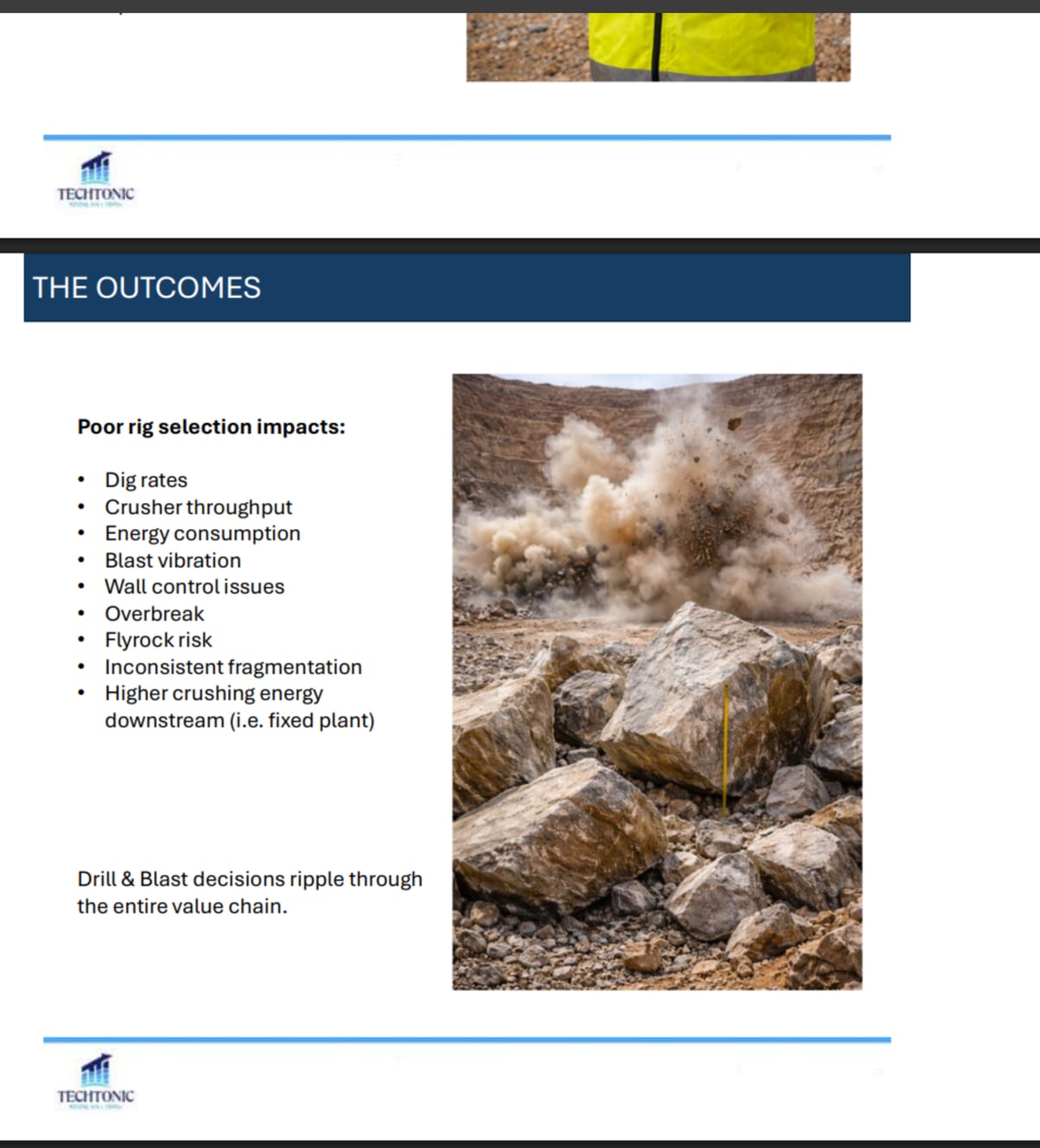
Poor rig selection shows up as lower dig rates, reduced crusher throughput, higher energy consumption, more blast vibration, wall control problems, overbreak, flyrock risk and inconsistent fragmentation. Inconsistent fragmentation then raises crushing energy at the fixed plant, which is a long way downstream of where the decision was made.
Drill and blast decisions ripple through the entire value chain. The rig is where that chain starts.
Is your drill fleet still matched to the ground you are mining now, or to the ground you were mining when it was selected?
The carousel
This piece began as a LinkedIn carousel. The full deck is below — use the arrows, or click any slide to enlarge.